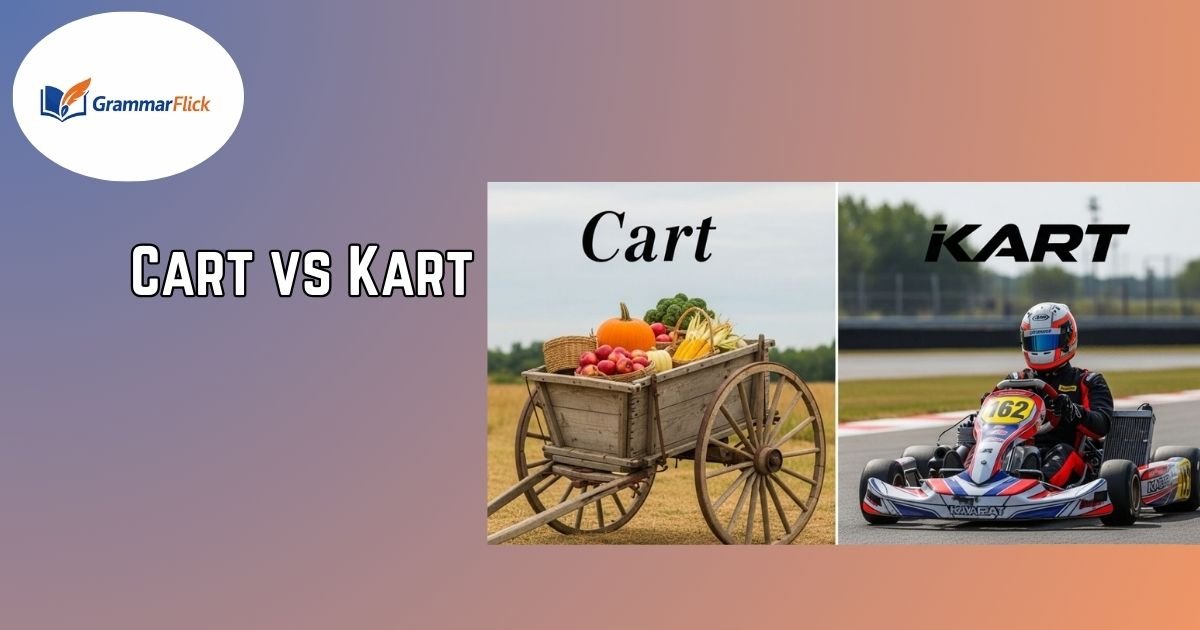
Cart vs Kart: Meaning, Differences, Examples, and Correct Usage (Complete Guide)
The English language often includes words that sound the same but have completely different meanings, and cart vs kart is a perfect example. Although these two terms are pronounced identically, they are used in very different contexts.
A cart usually refers to a vehicle or container designed to carry goods, while a kart is a small racing vehicle used for speed and recreation. Confusing these words can lead to grammar mistakes, unclear communication, and SEO errors. This complete guide explains the meaning, differences, examples, and correct usage of cart vs kart in simple, easy-to-understand terms.
What Does Cart Mean?
A cart is a vehicle or container used to carry or transport goods, items, or materials from one place to another. Traditionally, carts were simple wheeled structures pulled by animals such as horses or oxen for farming and trade. In modern usage, the meaning of cart has expanded significantly.
It commonly refers to shopping carts in grocery stores, luggage carts in hotels, and utility carts in workplaces. In the digital world, a cart also means an online shopping cart where customers store products before checkout. In every context, a cart is associated with carrying, holding, or transporting items efficiently.
What Does Kart Mean?
A kart is a small, lightweight motor vehicle designed mainly for racing or recreational driving. It is most commonly associated with go-karting, a popular motorsport enjoyed by both beginners and professional racers. Karts are built low to the ground, have simple steering systems, and are made for speed, control, and agility rather than carrying goods.
Many professional racing drivers start their careers in kart racing because it helps develop essential driving skills. The word kart is never used for shopping or transport purposes. Whenever the context involves racing, tracks, or motorsports, a kart is the correct and accurate term to use.
Historical Origins of Cart and Kart
The word cart has ancient roots, originating from Old English cræt and Old Norse kartr, both referring to a wheeled vehicle used for transporting goods. Carts have been essential tools in agriculture, trade, and daily life for centuries.
Kart is a much more modern term that emerged in the mid-20th century with the invention of go-karts. The unique spelling was intentionally chosen to distinguish racing vehicles from traditional carts and to give the word a modern, sporty identity.
Read More: Vicious vs Viscous: What’s the Difference? Meaning, Examples, and Common Mistakes Explained
Cart in Modern Usage
In modern usage, a cart refers to any tool or container used to carry or store items conveniently. The most common example is the shopping cart found in supermarkets and online stores, where customers collect products before purchasing.
Carts are also widely used as luggage carts in hotels, medical carts in hospitals, and utility carts in workplaces. In digital contexts, an online cart temporarily holds selected items during the checkout process. Whether physical or virtual, the purpose of a cart remains the same: to transport, organize, and manage items efficiently.
Kart in Modern Usage
In modern usage, a kart is mainly associated with racing, recreation, and motorsports. The most popular example is go-karting, a widely enjoyed activity at racing tracks, amusement centers, and sports arenas. Karts are small, low-profile vehicles designed for speed, sharp turns, and control rather than comfort or storage. They are commonly used in professional motorsport training, where many famous race car drivers begin their careers. The word kart also appears in popular culture and video games, such as Mario Kart, further reinforcing its connection to racing and entertainment rather than transportation or shopping.
How to Remember the Difference Easily
Remembering the difference between cart and kart is simple with a few easy tricks. Think of cart as related to carry—both start with the letter “C,” and a cart always carries items, whether in a store or online.
Kart is linked to karting and racing, activities focused on speed and fun. If it holds groceries, luggage, or products, it’s a cart. If you drive it on a track for recreation or competition, it’s a kart. These quick associations can help you choose the correct word every time.
When and Why “Kart” Emerged
The term “kart” emerged in the mid-20th century alongside the invention of go-karts, small racing vehicles designed for speed and agility. The unique spelling was intentionally created to distinguish these racing machines from traditional carts, which are meant for carrying goods.
By using the kart, inventors and marketers gave the word a modern, sporty identity that reflected recreation, competition, and motorsports. Today, kart is universally recognized in racing, entertainment, and gaming contexts, emphasizing its distinct purpose and meaning.
Common Mistakes People Make
One of the most common mistakes people make is using “shopping Kart” instead of the correct term “shopping cart.” Another frequent error is writing “go-cart racing” when the correct spelling is “go-kart racing.” Because the words sound the same, many writers assume they are interchangeable, which leads to spelling and meaning errors.
These mistakes often appear in blogs, ads, and even business websites, reducing professionalism and SEO quality. Using the wrong term can confuse readers and search engines, so understanding the correct usage of cart and kart is essential for clear and accurate communication.
Cart vs Kart in Different Industries
The usage of cart vs kart varies clearly across different industries. In retail and e-commerce, only cart is correct, as it refers to shopping carts, add-to-cart buttons, and checkout systems. Using a cart in this context looks unprofessional and harms credibility.
In sports and recreation, especially motorsports, a kart is the correct term for racing vehicles and tracks. The entertainment and gaming industry also uses kart, as seen in racing games. Understanding industry-specific usage helps writers, businesses, and marketers maintain accuracy, clarity, and strong brand trust across different platforms.
Cart Or Kart Center Marketing Campaign
A Cart or Kart Center marketing campaign should clearly highlight the services offered while emphasizing the correct terminology. For retail or e-commerce services, using a cart reinforces shopping convenience, online checkout, and product selection. For racing or entertainment centers, kart conveys excitement, speed, and motorsport experiences.
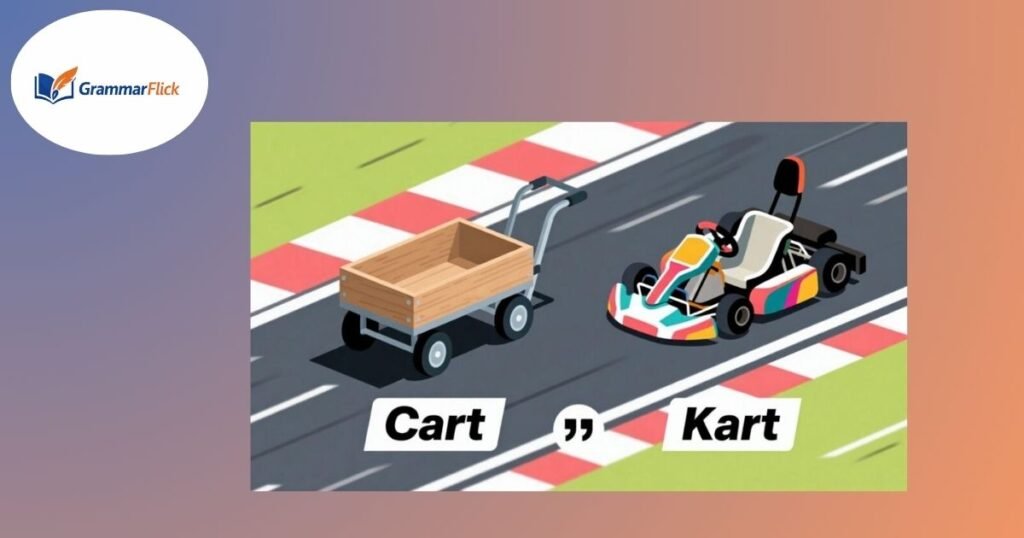
Campaigns should use engaging visuals, call-to-action phrases, and targeted keywords like “shopping cart deals” or “go-kart racing fun” to attract the right audience. Clear messaging ensures customers understand whether the center focuses on shopping or racing activities.
Final Words
Understanding the difference between cart vs kart is essential for clear communication and professional writing. A cart is designed to carry items, whether as a physical shopping cart, luggage cart, or digital online cart. A kart is a small racing vehicle used for motorsports, recreation, and gaming.
Confusing these words can lead to spelling errors, misunderstandings, and reduced credibility, especially in writing, marketing, and SEO. By remembering their meanings, contexts, and industry-specific usage, you can confidently choose the correct word every time and communicate with accuracy and clarity.
FAQs
Can I use “kart” instead of “cart”?
No. Kart is only for racing vehicles, while cart is only for carrying items in stores or online.
Why do People Confuse Cart and Kart?
They sound the same, but their meanings are different cart carries goods, a kart is for racing.