What Does PMO Mean in Text: Complete Guide To PMO Means in Chat, Social Media, and Slang (2026)
In today’s fast-paced digital world, abbreviations and slang dominate online conversations. One such term that often leaves people confused is PMO. If you’ve seen it in text messages, social media comments, or chats and wondered what it means, you’re not alone.
PMO is a versatile acronym with multiple interpretations depending on the context. Understanding its meaning can help you communicate more effectively and avoid misunderstandings. In this complete guide, we’ll explore what does PMO mean in text, how it’s used, and how to respond when someone uses it.
What Does PMO Mean in Text?
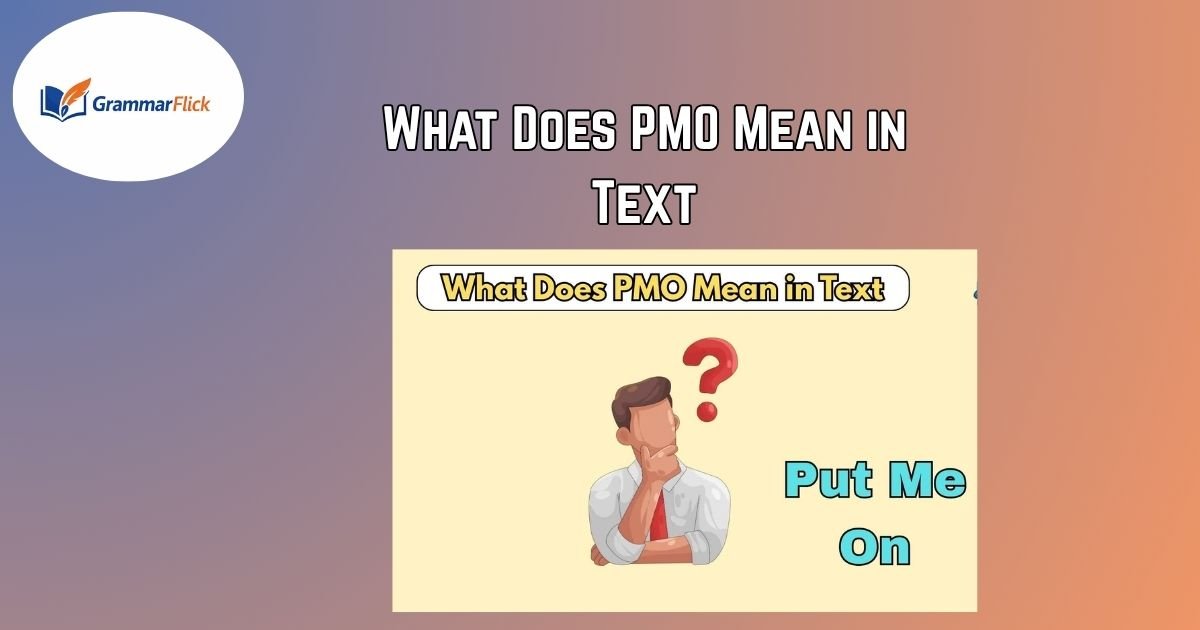
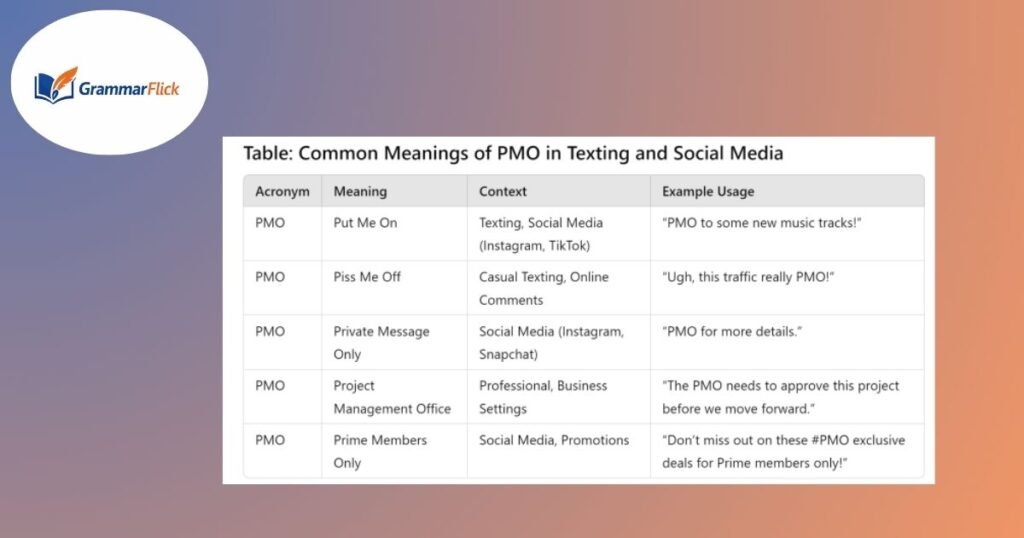
PMO is a popular slang acronym commonly used in texting and social media conversations. It has multiple meanings, but the most widely recognized ones are “Put Me On” and “Pisses Me Off.” The meaning depends entirely on the context in which it is used.
In casual chats, PMO helps people express emotions or make requests quickly, without having to type long sentences. Because of its flexibility, it has become especially popular among younger users online. Understanding PMO correctly requires paying attention to tone, topic, and the overall conversation to avoid confusion or misinterpretation.
PMO as “Put Me On”
When PMO stands for “Put Me On,” it is used to ask someone for recommendations, introductions, or access to something interesting. People often use it to discover new music, movies, trends, or even opportunities.
For example, someone might say, “That playlist sounds amazing, PMO!” which means they want you to share it with them. This usage is friendly and curious in tone. It reflects a desire to learn or explore something new through others. “Put Me On” is especially common on social media platforms where sharing content and trends is part of everyday interaction.
PMO as “Pisses Me Off”
When PMO is used to mean “Pisses Me Off,” it expresses frustration, irritation, or anger about a situation. This version of PMO is often seen in casual conversations where someone is venting their feelings.
For example, a person might say, “Slow internet, really PMO,” to show they are annoyed. The tone is usually negative and emotional, so it’s important to read the context carefully. This meaning is commonly used among friends or peers and is rarely appropriate in formal communication, as it can come across as too blunt or informal.
Less Common Meaning: Project Management Office
In a professional or business setting, PMO stands for “Project Management Office.” This refers to a department within an organization that oversees projects, ensures standards are followed, and helps teams stay aligned with goals.
Unlike the slang meanings, this usage is formal and used in workplace communication. For example, someone might say, “The PMO will review the project plan before approval.” This meaning is not common in everyday texting but is widely used in corporate environments, especially in industries that rely on structured project management practices.
How to Identify the Correct Meaning of PMO
Understanding the correct meaning of PMO in a text message depends largely on context, tone, and the situation being discussed. If the message sounds curious, excited, or related to discovering something new, PMO likely means “Put Me On.”
On the other hand, if the tone feels negative, frustrated, or emotional, it usually means “Pisses Me Off.” Paying attention to surrounding words, emojis, and the topic of conversation can help clarify the intent. For example, complaints signal frustration, while discussions about music, fashion, or trends suggest a request for recommendations.
Examples of PMO in Text Conversations
PMO can appear in different types of conversations depending on its meaning. For instance, if someone says, “That new song is amazing, PMO to more like this,” they are asking for recommendations.
In another case, a person might text, “People interrupting me really PMO,” which expresses annoyance. You may also see it in social media comments like, “PMO to your skincare routine!” showing curiosity. These examples highlight how the same acronym can shift meaning based on context, making it important to read the full message carefully before responding.
Why PMO Is So Popular
PMO has gained popularity because it is short, versatile, and easy to use in fast-paced digital conversations. People prefer quick expressions that save time while still conveying clear meaning, and PMO does exactly that.
Its dual meanings allow users to either request recommendations or express frustration without typing long sentences. Social media platforms have played a big role in spreading slang like PMO across different communities. Its catchy and adaptable nature makes it especially appealing to younger audiences who enjoy using trendy and efficient language online.
PMO on Social Media
PMO is widely used across social media platforms like Instagram, TikTok, Snapchat, and X (Twitter), where short and expressive language is preferred. Users often include PMO in captions, comments, or direct messages to either ask for recommendations or express frustration.
For example, someone might comment, “PMO to your playlist!” when they like a song, or say, “Bad service, really PMO ” to show annoyance. Social media trends play a major role in spreading slang, and PMO has become part of everyday digital communication due to its simplicity and versatility.
When to Use PMO in Texting
PMO is best used in casual and informal conversations, especially when chatting with friends or people familiar with internet slang. You can use it when asking for suggestions, such as music, movies, or fashion ideas, or when expressing frustration about something minor.
It’s important to avoid using PMO in professional or formal communication, like emails or workplace messages, as it may seem unprofessional or unclear. Knowing your audience is key to using PMO appropriately and ensuring your message is understood correctly.
How to Respond to PMO in Text
Responding to PMO depends on the meaning being used in the conversation. If someone uses PMO as “Put Me On,” you can reply by sharing recommendations, links, or helpful suggestions. For example, you might say, “Sure, I’ll send you some good options!”
If PMO means “Pisses Me Off,” the best response is to show understanding or empathy, such as “Yeah, that’s really annoying” or “I get why that bothers you.” Paying attention to tone helps you give the right response and keep the conversation smooth and engaging.
Common Misunderstandings About PMO
Responding to PMO depends on the meaning being used in the conversation. If someone uses PMO as “Put Me On,” you can reply by sharing recommendations, links, or helpful suggestions. For example, you might say, “Sure, I’ll send you some good options!”
If PMO means “Pisses Me Off,” the best response is to show understanding or empathy, such as “Yeah, that’s really annoying” or “I get why that bothers you.” Paying attention to tone helps you give the right response and keep the conversation smooth and engaging.
Read More: ASL Meaning in Text: A Complete Guide to Understanding This Popular Slang
PMO vs Other Similar Slang Terms
- PMO vs LMK (Let Me Know): PMO asks for recommendations or expresses frustration, while LMK is simply a request for information or updates.
- PMO vs IMO (In My Opinion): PMO is emotional or request-based, whereas IMO is used to share personal opinions.
- PMO vs SMH (Shaking My Head): PMO shows direct frustration, while SMH expresses disappointment or disbelief.
- PMO vs IDK (I Don’t Know): PMO conveys emotion or curiosity, whereas IDK indicates uncertainty or lack of knowledge.
- PMO vs TBH (To Be Honest): PMO focuses on reactions or requests, while TBH is used to express honesty or sincerity.
- PMO vs BRB (Be Right Back): PMO communicates feelings or asks for suggestions, while BRB is used to indicate a temporary absence.
- PMO vs FOMO (Fear of Missing Out): PMO can ask to be included (“Put Me On”), while FOMO describes anxiety about missing experiences.
- PMO vs TMI (Too Much Information): PMO expresses annoyance or curiosity, whereas TMI signals that something is overly personal.
- PMO vs FYI (For Your Information): PMO is conversational and emotional, while FYI is used to share factual information.
- PMO vs DM (Direct Message): PMO is slang for expressions or requests, while DM refers to private messaging on social platforms.
Cultural Impact of PMO
PMO reflects the fast-changing nature of digital communication and how language evolves with online culture. As slang terms like PMO spread through social media, they become part of everyday conversations, especially among younger generations.
Its dual meaning allows users to express both curiosity and frustration quickly, making communication more efficient and relatable. PMO also helps create a sense of belonging within online communities, where shared language strengthens connections. Over time, terms like PMO influence how people communicate globally, showing how internet culture continues to shape modern language and social interaction.
Final Words
PMO in text is a versatile slang acronym that mainly stands for “Put Me On” or “Pisses Me Off,” depending on the context. It can be used to ask for recommendations, such as music or trends, or to express frustration about something annoying. The meaning becomes clear by looking at the tone, topic, and surrounding words in a conversation.
PMO is popular in casual texting and social media because it is short, expressive, and easy to use. Understanding how and when to use PMO helps you communicate more effectively and avoid confusion in modern digital conversations.
FAQs
What Does DPMO Meaning in Text And How Is It Used in Online Conversations?
DPMO in text usually stands for “Don’t Piss Me Off.” It is a slang expression used to warn someone not to annoy, irritate, or provoke the speaker. People often use DPMO in casual conversations or on social media when they are already frustrated or want to set a serious tone.
Is PMO Rude To Use in Text Messages?
PMO is not inherently rude, but if used as “Pisses Me Off,” it may sound negative. It’s best used in casual conversations with people familiar with slang.