Verbs That Start With F: A Complete Guide to Common and Useful F Verbs
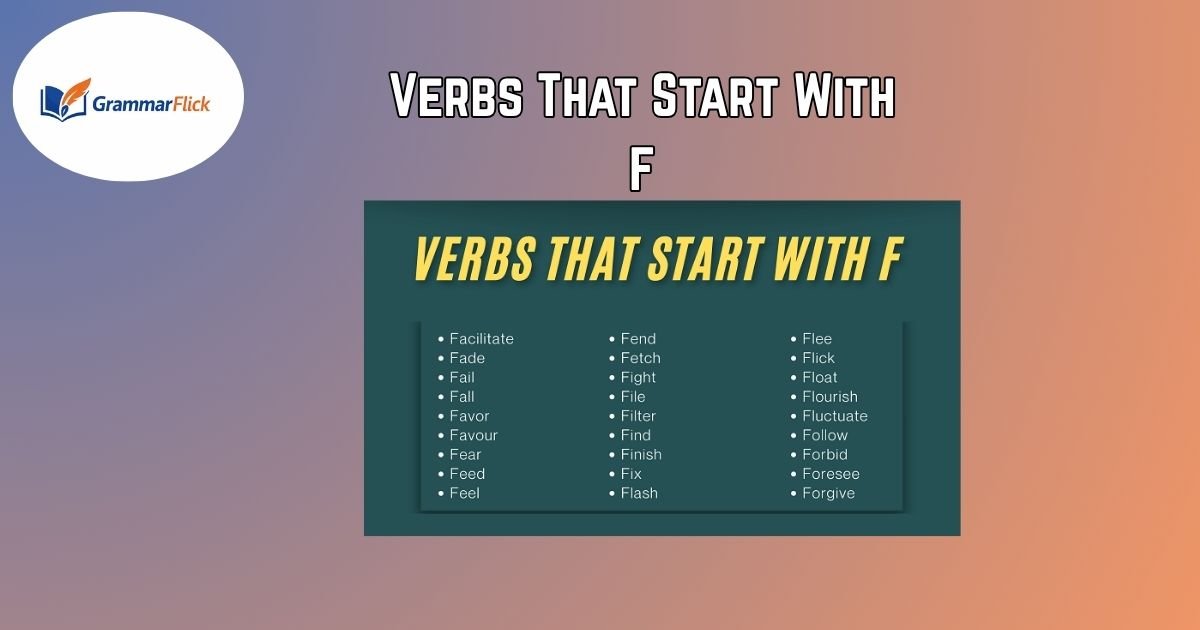
Verbs that start with F are an important part of the English language, helping us describe actions, feelings, and everyday activities. From common words like find, follow, and finish to more advanced verbs such as facilitate and formulate, these action words are useful in both spoken and written communication.
Learning verbs that start with F can expand your vocabulary, improve your writing skills, and make your conversations more expressive. In this guide, you’ll discover a variety of F verbs, their meanings, and examples of how they are used in real-life situations.
List of Verbs That Start With F
- Frame
- Formulate
- Foster
- Foster
- Forge
- Fuel
- Forecast
- Focus
- Form
- Fulfill
Frame
To frame means to construct, shape, or outline an idea, object, or perspective. Writers often frame arguments to guide readers toward a specific interpretation. In photography, framing refers to composing a shot to highlight the subject. In conversations, framing can influence how people perceive information.
This verb is powerful because it blends creativity with structure, making it useful in storytelling, design, communication, and problem‑solving. Understanding how to frame thoughts effectively can elevate clarity and persuasion in both personal and professional contexts.
Formulate
To formulate means to develop, craft, or design something with precision. It is commonly used in scientific, academic, and strategic environments where ideas must be expressed clearly and logically. When you formulate a plan, you are intentionally shaping steps toward a goal.
When you formulate a hypothesis, you are creating a testable statement. This verb emphasizes careful thinking, structure, and intention. It is especially valuable in writing, research, business planning, and decision‑making, where clarity and accuracy matter.
Foster
To foster means to encourage, nurture, or support growth. It is often used in educational, emotional, and organizational contexts. Leaders foster teamwork, teachers foster curiosity, and parents foster confidence.
The verb carries a sense of long‑term development and positive influence. It suggests creating an environment where ideas, relationships, or skills can flourish. Using “foster” in writing adds depth because it implies active participation in the improvement of someone or something.
Forge
To forge means to create something strong, lasting, or meaningful—often through effort and determination. Historically, it refers to shaping metal through heat and hammering. In modern language, it describes building relationships, agreements, or identities.
People forge partnerships, forge careers, and forge new paths. The verb conveys strength, resilience, and craftsmanship. It suggests that the result is durable and valuable because it required hard work.
Fuel
To fuel means to energize, power, or stimulate action. It can refer to literal fuel, like gasoline powering a car, or metaphorical fuel, like passion fueling creativity. This verb is dynamic and motivational. It implies that something is being driven forward with intensity. Writers use “fuel” to describe momentum, ambition, or inspiration. It is a strong choice when emphasizing the force behind progress or change.
Forecast
To forecast means to predict or estimate future events based on data or patterns. It is widely used in business, finance, weather science, and strategic planning. Forecasting helps organizations prepare for risks and opportunities. The verb conveys analysis, foresight, and informed judgment. When you forecast trends, you are interpreting signals to anticipate what may come next. It is a valuable verb for describing proactive decision‑making.
Focus
To focus means to direct attention, energy, or resources toward a specific goal or subject. It is essential in productivity, learning, and communication. When you focus on a task, you eliminate distractions and concentrate fully. When you focus a camera, you sharpen the image. This verb emphasizes clarity, intention, and discipline. It is powerful because it describes the mental process of narrowing down what truly matters.
Read More: Top 20 Tools That Start With A: The Ultimate A‑to‑Z Guide for Professionals and DIY Enthusiasts
Form
To form means to create, shape, or establish something. It can refer to physical objects, ideas, relationships, or organizations. People form opinions, form habits, and form teams. The verb highlights the beginning of something new and the process of bringing elements together. It is versatile and foundational, making it useful in writing about development, structure, and transformation.
Fulfill
To fulfill means to complete, satisfy, or achieve something expected or desired. It is often used in emotional, professional, and contractual contexts. People fulfill dreams, fulfill promises, and fulfill responsibilities. The verb conveys accomplishment and integrity. It suggests that something meaningful has been brought to completion. Using “fulfill” adds a sense of purpose and resolution to writing.
Final words
Learning verbs that start with F is a great way to strengthen your English vocabulary and improve your communication skills. These verbs help describe actions, emotions, and processes clearly and effectively. Whether you use words like find, follow, fix, finish, or focus, each verb adds depth and precision to your speaking and writing.
Expanding your knowledge of F verbs can also enhance reading comprehension and boost confidence in everyday conversations. By practicing these verbs regularly and using them in sentences, you can develop stronger language skills and become a more fluent and expressive English speaker.
FAQs
What Are Verbs That Start With F?
Verbs that start with F are action words beginning with the letter F, such as form, focus, foster, and forge. These verbs express actions related to creating, shaping, supporting, moving, or changing something. They are commonly used in writing, communication, business, and storytelling because they add clarity and strength to sentences.
Why are F‑verbs Useful in Writing?
F‑verbs are powerful because many of them convey growth, movement, development, or transformation. Words like facilitate and formulate help writers express complex processes clearly. Others, like fuel or flourish, add energy and emotion. Using strong F‑verbs can make your writing more vivid, persuasive, and professional.
What are Some Advanced or Powerful F‑verbs?
Advanced F‑verbs include fathom, fabricate, fluctuate, facilitate, and formulate. These verbs are excellent for academic essays, business reports, and creative writing because they express precise, high‑level actions.
How can I use F‑Verbs to improve my vocabulary?
You can improve your vocabulary by learning the meanings, synonyms, and example sentences of verbs like foster, forge, and feature—practice using them in sentences, writing exercises, or conversations. The more you use them, the more naturally they will become part of your writing style.
Are there F‑verbs suitable for academic writing?
Yes. Academic‑friendly F‑verbs include formulate, facilitate, forecast, foster, and frame. These verbs help express analysis, reasoning, and structured thinking.