How to Say Sorry I Missed Your Call Professionally| 80+ Ways to Say Sorry
In today’s fast-paced business world, missing a call is inevitable. How you respond can leave a lasting impression on colleagues, clients, and business partners. Crafting a professional, polite, and concise message ensures you maintain credibility while expressing your willingness to connect. Below, we’ve compiled over 80 ways to say “how to say sorry I missed your call professionally,” along with examples, alternative wording, and tips for different contexts such as email, text, and voicemail.
What Does “Sorry I Missed Your Call” Mean?
The phrase “sorry for missing your call” is a polite and professional way to acknowledge that you were unable to answer a phone call. It conveys respect for the caller’s time while expressing regret for not being available.
This phrase is commonly used in personal, professional, and business contexts, often followed by an offer to return the call or schedule a convenient time to talk. Using it appropriately helps maintain clear communication and preserves relationships with colleagues, clients, or acquaintances.
How to Say Sorry I Missed Your Call Professionally| Classic and Polite Alternatives
- I apologize for missing your call.
- Sorry, I wasn’t available to take your call.
- Apologies for not being able to answer your call.
- I regret missing your call earlier.
- Sorry, I couldn’t take your call at the time.
- My apologies for not answering your call.
- I’m sorry I missed your call.
- Please accept my apologies for missing your call.
- Regretfully, I missed your call.
- I’m sorry I wasn’t able to pick up.
- Apologies for being unavailable when you called.
- I regret not being able to take your call.
- Sorry, I wasn’t around to answer your call.
- I apologize for not picking up your call.
- Sorry, I couldn’t answer your phone earlier.
- I’m sorry I missed your important call.
- Apologies for the missed call.
- I regret I was unable to take your call.
- Sorry, I was unavailable to take your call.
- I apologize for not being reachable when you called.
Friendly Yet Professional Variations
- “I’m sorry I missed your call – I was tied up.”
- “Sorry, I couldn’t answer; I was in a meeting.”
- “I apologize for being unavailable when you called.”
- “I just saw your missed call – apologies for the delay.”
- “I missed your call and wanted to reach out as soon as possible.”
When to Use “How to Say Sorry I Missed Your Call Professionally”?
You should use “Sorry I missed your call” professionally whenever you are unable to answer a call in a work-related or formal context. This includes situations such as being in meetings, on another call, traveling, or away from your desk. It is appropriate for communicating with colleagues, clients, business partners, or supervisors.
Using this phrase shows respect for the caller’s time, maintains professionalism, and preserves relationships. It is often paired with an offer to return the call or schedule a convenient time to connect, demonstrating accountability, responsiveness, and effective communication in professional settings.
Read More: How to Answer ‘Why am I Interested in This Position
Sorry, I Missed Your Ring.
The phrase “Sorry, I missed your ring” is a casual, polite way to acknowledge that you didn’t answer someone’s phone call. While less formal than “Sorry I missed your call,” it works well in friendly professional contexts or informal communications with colleagues, peers, or acquaintances.
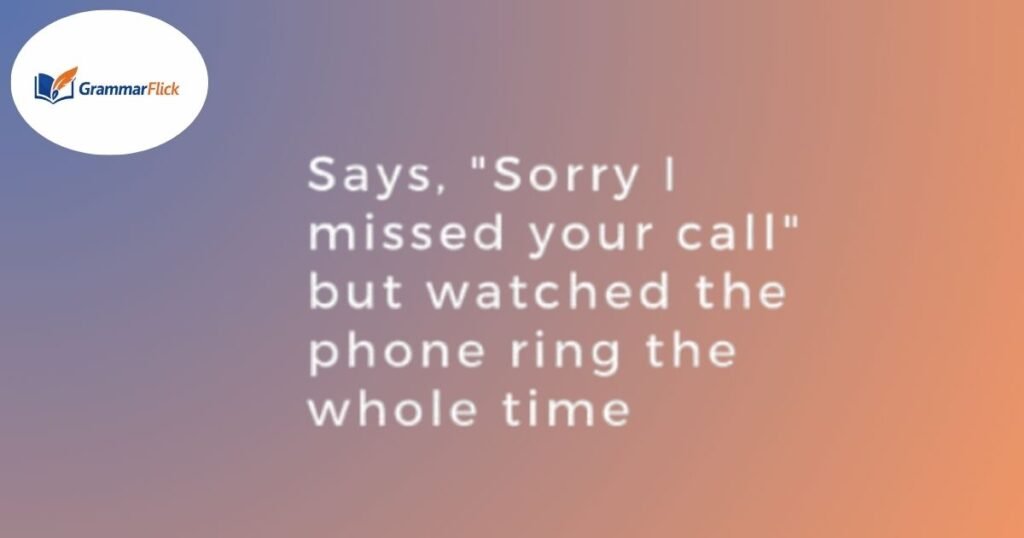
Using this phrase shows that you noticed the call and respect the caller’s effort to reach you. It’s often followed by a suggestion to reconnect, such as returning the call, texting, or scheduling a convenient time to speak.
Apologies for Being Unavailable When You Called.
It conveys respect for the caller’s time while maintaining a polite tone. This wording is suitable for both formal and semi-formal contexts, including communication with clients, colleagues, or supervisors. Typically, it is followed by an offer to reconnect, such as returning the call or scheduling a convenient time, demonstrating professionalism, responsiveness, and consideration for the other person’s needs.
Please Accept my Apologies for Missing Your Call.
It conveys professionalism, politeness, and consideration for the caller’s time. This wording is ideal for business emails, voicemails, or messages to clients, colleagues, or supervisors. Typically, it is followed by an offer to return the call or arrange a convenient time to speak, demonstrating accountability, reliability, and effective communication in professional settings.
My Apologies for not Answering Your Call.
It demonstrates respect for the caller’s time while maintaining a courteous tone. This wording is suitable for emails, voicemails, or messages to colleagues, clients, or supervisors. Often, it is paired with an offer to return the call or schedule a convenient time to talk, showing responsibility, attentiveness, and a commitment to maintaining effective communication in professional relationships.
I Was Tied up When You Called.
It acknowledges the caller’s effort while providing a brief, honest reason for your unavailability. This wording works well in emails, texts, or voicemails to colleagues, clients, or business contacts. Typically, it is followed by an offer to reconnect or schedule a suitable time, demonstrating accountability, respect, and a commitment to maintaining smooth professional communication.
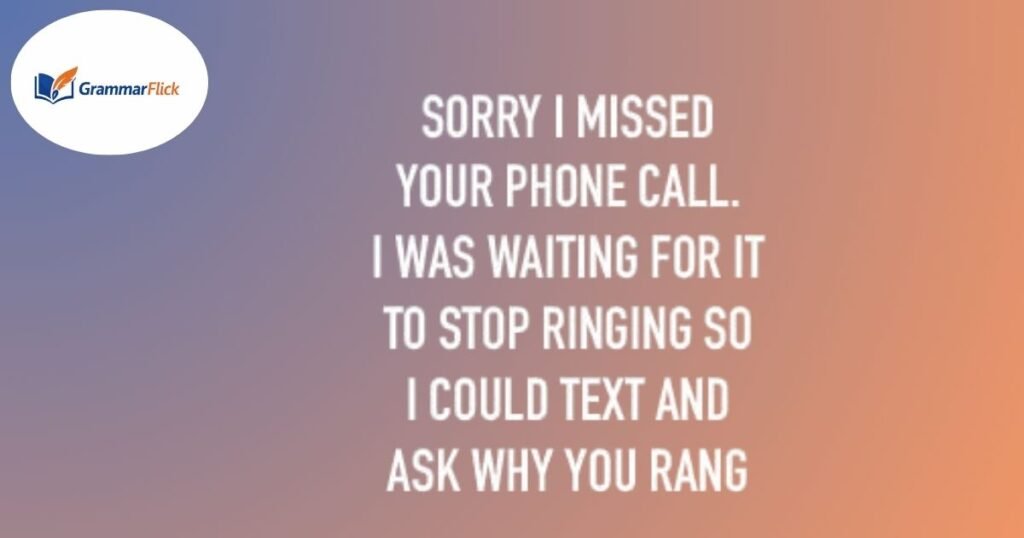
I Couldn’t Pick Up Earlier
It conveys politeness and shows that you recognize the caller’s effort to reach you. This wording is appropriate for emails, texts, or voicemails in both formal and semi-formal professional settings. It is often followed by a suggestion to reconnect, such as returning the call or scheduling a convenient time. Using this phrase demonstrates accountability, respect, and a commitment to maintaining clear and courteous communication.
I was in the Middle of Something.
It acknowledges the caller’s attempt to reach you while providing a brief, respectful reason for your unavailability. This wording works well in emails, texts, or voicemails when communicating with colleagues, clients, or supervisors. Following this phrase with an offer to reconnect or schedule a suitable time demonstrates professionalism, accountability, and consideration for maintaining effective communication in any professional relationship.
How to Respond When Someone Says This to You
When someone tells you, “Sorry I missed your call” or similar phrases, the best response is polite, understanding, and professional. You can acknowledge their apology and suggest a convenient way to reconnect.
For example, reply with “No problem, when would be a good time to talk?” or “Thanks for letting me know. I’m available tomorrow afternoon if that works for you.” Showing understanding maintains a positive relationship and demonstrates professionalism. Avoid expressing frustration or impatience, and focus on finding a mutually convenient time to continue the conversation, ensuring smooth and respectful communication.
Final Thought
Saying “Sorry, I missed your call” professionally is essential for maintaining strong relationships in the workplace and with clients. Using polite, respectful, and clear language shows that you value the caller’s time while demonstrating accountability and responsiveness.
Whether through email, voicemail, text, or instant messaging, pairing the apology with a follow-up action like scheduling a convenient time or returning the call promptly reinforces professionalism. By choosing the right tone and phrasing, you can turn a missed call into an opportunity to show reliability, courtesy, and effective communication in any professional setting.
How To Say Sorry I Missed Your Call Professionally FAQs
Can I Use Casual Phrases in a Professional Setting?
Casual phrases like “Sorry I missed your call” are acceptable with colleagues or familiar clients, but for senior contacts or formal situations, opt for more professional wording to maintain credibility.
Is it Necessary to Follow up After Missing a Call?
Absolutely. Following up promptly shows accountability and respect for the caller’s time. You can return the call, schedule a meeting, or respond via email or text, depending on the context.
What’s another way to Politely Apologize for Missing a Call?
You can say, “I’m sorry I wasn’t able to take your call. Please let me know a convenient time to reach you.”
How to Say Sorry I Missed Your Call Professionally?
You can say, “I apologize for missing your call. I was unavailable at the time, but I’m happy to connect now or at your convenience.” This is polite, professional, and shows your willingness to follow up.
What Is The Best Sorry I Missed Your Call Text?
A good sorry I missed your call text is short, polite, and sincere. For example: “Sorry I missed your call. I was busy at the moment. Is everything okay?”
How To Respond To A Missed Call By Text?
You can reply with a polite message such as: “Sorry I missed your call. I just saw it. Is everything okay?”