PTSO Meaning Slang: What It Really Means in 2026
In the fast-paced world of texting and social media, acronyms and slang evolve constantly. One of the latest terms gaining attention is PTSO. Seen in chats, comments, and posts, many people wonder what it means and how to use it correctly.
PTSO has become a popular shorthand among online communities, especially on platforms like TikTok, Instagram, and WhatsApp. It’s a casual, fun way to communicate efficiently and share information with others. This guide will break down the PTSO Meaning, explore its origins, provide examples, and give tips on using it effectively in your digital conversations.
What Does PTSO Meaning?
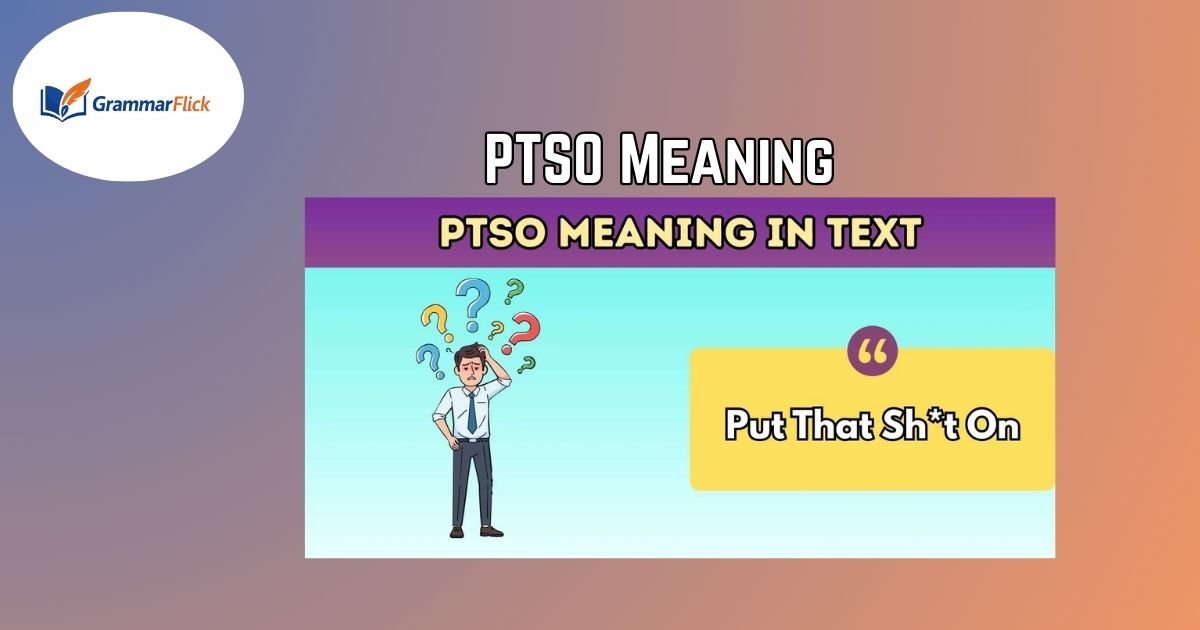
PTSO stands for “Put That Shit On.” It’s a slang acronym used in texting, online chats, and social media when you want someone to share information, a meme, or a post with others. Unlike FYI or DM, PTSO is about actively spreading something online.
For example: “This song is amazing, PTSO!” means you want your friends or followers to see and share it too. It’s casual, playful, and mostly used on platforms like TikTok, Instagram, Discord, and WhatsApp. Using PTSO keeps your messages short, fun, and in tune with online trends.
Origins of PTSO
The origins of PTSO trace back to the fast-paced world of online chatting and social media, where brevity and speed are essential. It likely emerged in gaming communities, online forums, and messaging apps where users needed a quick way to ask others to share information.
Platforms like TikTok, Discord, Instagram, and WhatsApp helped popularize the acronym, especially among Gen Z and Millennials. PTSO reflects a broader trend of digital slang, where acronyms condense full phrases into four letters for convenience. Over time, it became a widely recognized way to prompt sharing and communication in online communities.
How to Use PTSO in Texting
Using PTSO in texting is simple but requires understanding the context. It’s primarily used to ask someone to share information, a message, or content online. In casual chats, you might write, “This meme is hilarious, PTSO!” to encourage your friend to forward it.
In group messages, it works well for spreading updates, like, “I found the event details, PTSO, and the rest of the team.” On social media, PTSO can appear in captions or comments, prompting followers to share: “Check out this trend, PTSO!” Remember, PTSO is informal and best suited for online or casual conversations, not professional messages.
Why Do People Use Slang Like PTSO?
People use slang like PTSO because it makes communication faster, easier, and more fun in online spaces. In a world dominated by texting, social media, and instant messaging, short acronyms save time while still conveying clear meaning.
Slang also helps users express personality, connect with communities, and show cultural awareness, especially among Gen Z and Millennials. Terms like PTSO allow people to share information, memes, or messages quickly without typing long sentences. Beyond convenience, using slang creates a sense of belonging, signaling that you’re part of modern, internet-savvy circles where playful, efficient communication is valued.
PTSO vs Similar Acronyms
- FYI – For Your Information: passive info sharing.
- DM – Direct Message; private messaging.
- PLS – Please; general polite request.
- BRB – Be Right Back; temporary absence.
- TTYL – Talk To You Later; ending a conversation.
- OMG – Oh My God; expressing surprise.
- LOL – Laugh Out Loud; reaction to humor.
- IDK – I Don’t Know; expressing uncertainty.
- BTW – By The Way; adding extra info.
- ROFL – Rolling On Floor Laughing; strong reaction to humor.
- TTYS – Talk To You Soon; friendly sign-off.
- SMH – Shaking My Head; expressing disappointment or disbelief.
- IMO – In My Opinion; giving a viewpoint.
- ICYMI – In Case You Missed It; sharing updates.
- NSFW – Not Safe For Work; content warning.
- TMI – Too Much Information; oversharing.
- IRL – In Real Life; offline context.
- BFF – Best Friends Forever; social connection.
- JK – Just Kidding; playful clarification.
- NP – No Problem; casual acknowledgment.
PTSO on Different Social Media Platforms
PTSO is used differently across social media platforms, adapting to each community’s style. On TikTok, it often appears in captions or comments to encourage sharing viral videos or trends, like “This dance is hilarious, PTSO!” On Instagram, users add it in posts or stories, tagging friends to spread content: “Check this meme, PTSO @username!”
In WhatsApp or Messenger, PTSO works in group chats to relay important updates or messages: “PTSO sends the schedule to everyone in the group.” Across platforms, PTSO remains casual, playful, and informal, making it a popular shorthand for asking someone to share content online efficiently.
Read More: IWKY Meaning in Text: The Secret Code You Must Know!
Is PTSO Used Worldwide?
PTSO is primarily popular in English-speaking online communities, but its influence is spreading worldwide. It’s most commonly used by Gen Z and Millennials active on platforms like TikTok, Instagram, Discord, and WhatsApp.
While similar acronyms exist in other languages, PTSO’s specific meaning, “Please Tell Someone Online,” is mostly recognized in digital spaces where English dominates. Its usage is casual, informal, and tied to internet culture, so it’s less common in professional settings or offline conversations. Still, as social media continues to globalize, PTSOs’ reach is steadily expanding.
Common Mistakes When Using PTSO
When using PTSO, people often make a few common mistakes. One is using it in formal or professional communication, where slang is inappropriate. Another is assuming everyone knows the acronym, which can confuse mixed audiences. Overusing PTSO in a conversation can also make messages seem forced or repetitive.
Some users confuse it with other acronyms like FYI or DM, misapplying its meaning. To avoid these mistakes, always consider the context, know your audience, and use PTSO sparingly and appropriately in casual online chats and social media posts.
Tips for Using PTSO Effectively
To use PTSO effectively, start by knowing your audience. Only use it with people familiar with online slang. Provide context when necessary so recipients understand the request to share information. Pairing PTSO with emojis can make messages more playful and engaging.
Use it sparingly to avoid overloading conversations, and combine it with clear instructions if sharing content is involved. Finally, reserve PTSO for informal chats, social media, or group messages, keeping it casual and fun while ensuring your message is understood and acted upon.
How to Respond When Someone Says PTSO
When someone says PTSO, the response depends on context. In casual chats, you can acknowledge the request: “Got it, I’ll PTSO this to everyone.” If it’s unclear who or where to share, ask for clarification: “Who should I PTSO this to?”
On social media, a playful or emoji-filled reply works well, like. The key is to confirm that you understand the intention to share the content or information. Responding appropriately ensures smooth communication and helps spread the message efficiently while keeping the tone friendly and casual.
Final Words
PTSO, meaning “Put That Shit On,” is a versatile and playful acronym that has become a staple of modern online communication. It allows users to quickly ask friends, followers, or group members to share messages, memes, or updates across social media and chat platforms.
Popular among Gen Z and Millennials, PTSO reflects the fast-paced, informal, and community-driven nature of digital interactions. By understanding its meaning, context, and proper usage, anyone can use PTSO effectively to stay connected, share information efficiently, and participate confidently in the ever-evolving world of internet slang.
FAQs
Can I use PTSO in Professional Emails?
No, PTSO is informal slang and best used in casual chats, social media, or group messages, not in professional or formal communication.
Where is PTSO Most Commonly Used?
PTSO is most popular on social media platforms like TikTok, Instagram, Discord, and WhatsApp, especially among Gen Z and Millennials.