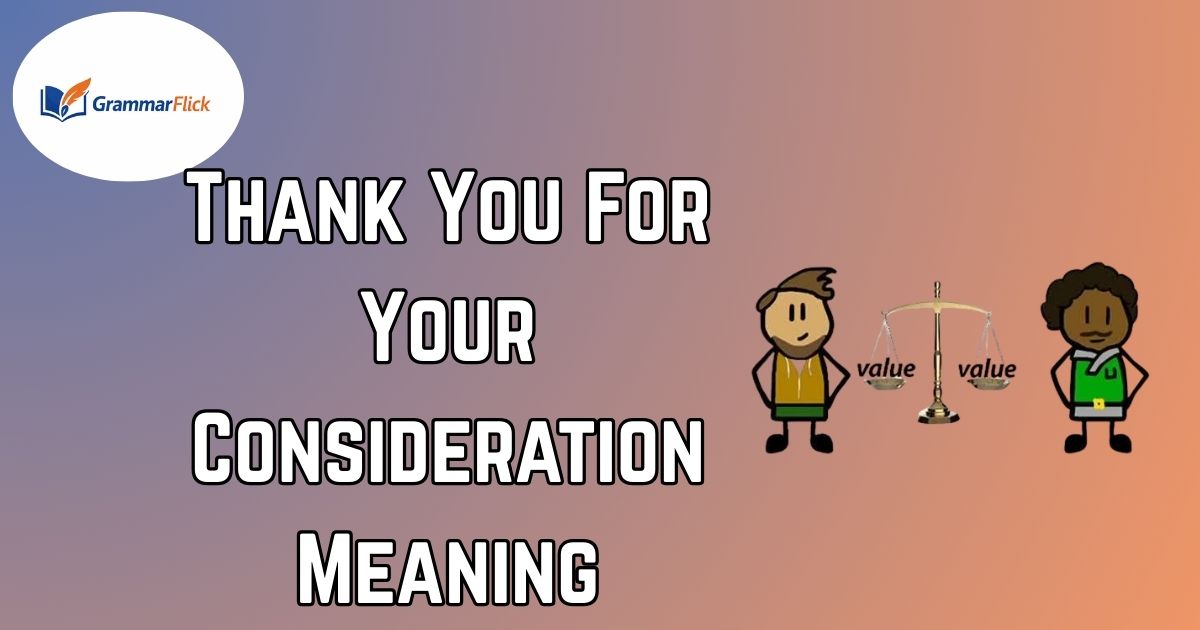
100+ Ways to Thank You For Your Consideration Meaning
The phrase “thank you for your consideration” is a polite and professional way to express gratitude, often used in emails, job applications, or formal requests. While simple, it can sometimes feel repetitive or overused. Fortunately, countless alternatives convey the same appreciation with variety and nuance.
From casual to formal, each alternative allows you to tailor your message to the context, audience, or tone you wish to set. This guide offers 100+ ways to say “thank you for your consideration Meaning,” helping you express gratitude effectively while keeping your communication fresh, sincere, and impactful in both professional and personal settings.
How Do You use “Thank You for Your Consideration”?
The phrase “thank you for your consideration” is used to politely show appreciation when someone takes the time to review your request, application, or proposal. It is often added at the end of emails, cover letters, or formal messages.
For example, you might write, “Thank you for your consideration, and I look forward to your response.” Using this phrase demonstrates respect and gratitude, leaving a positive impression on the reader while maintaining a professional and courteous tone.
Pros or Cons of Using “Thank You for Your Consideration”
Using “thank you for your consideration” can be a polite way to close professional messages, but it may not always be the most impactful choice. While it conveys respect and gratitude, overuse or lack of personalization can make it feel generic.
Pros
- Shows politeness and professionalism
- Expresses gratitude effectively
- Leaves a positive impression
- Suitable for formal communications
- Easy to include in emails or letters
Cons
- Can feel overused or generic
- Lacks personal touch
- It may seem insincere if repeated
- Doesn’t highlight your strengths
- Can appear outdated in casual contexts
Thanks for your Consideration Meaning synonyms
- Looking forward to talking more.
- Thank you for your time and consideration
- Thank you for your kind consideration
- Thanks again for your time.
- Thanks so much for your help!
- Value you!
- Appreciate you big time.
- You’re the best.
- You rock!
- You’re a lifesaver.
- I greatly appreciate this.
- Thanks a ton.
- Cheers!
- Thanks for taking a look!
- Thanks a bunch.
- Couldn’t have done it without you.
- Grateful for you.
- Much obliged.
- That was very thoughtful of you.
- I’m forever indebted.
- How can I thank you enough?
- I owe you one.
- Thank you for all you do.
- I appreciate you.
When We Use Thank you for your Consideration Meaning
We use “thank you for your consideration” to politely express appreciation when someone takes the time to review, evaluate, or think about our request, application, or proposal. It is commonly used in professional settings, such as at the end of job applications, cover letters, emails, or business proposals, to acknowledge the recipient’s time and attention.
The phrase signals respect and gratitude while maintaining a formal tone. Using it appropriately helps create a positive impression, showing that you value the effort the other person is making to review your work or request, without coming across as pushy or demanding.
I’m Grateful for Your Attention
The phrase “I’m grateful for your attention” is a polite way to show appreciation when someone has taken the time to focus on your message, request, or presentation. It conveys respect and acknowledgment for their effort, whether in professional emails, reports, or formal communications.
Using this phrase helps create a positive impression by demonstrating gratitude and courtesy. It can be an effective alternative to standard closings, adding a personal and sincere touch while maintaining professionalism and showing that you value the recipient’s time and focus.
After a Job Interview
After a job interview, expressing gratitude is an important way to leave a positive impression. You can use phrases like “thank you for your time and consideration” or “I’m grateful for your attention” to show appreciation to the interviewer.
A brief follow-up email highlighting your interest in the role and thanking them for the opportunity demonstrates professionalism and courtesy. This simple gesture reinforces your enthusiasm for the position, strengthens your connection with the employer, and helps you stand out among other candidates politely and respectfully
After Receiving or Declining a Job Offer
After receiving or declining a job offer, expressing gratitude is a professional and courteous step. When accepting, you might say, “Thank you for your consideration and this opportunity. I’m excited to join your team and contribute to the organization’s success.”
When declining, a polite approach could be, “I sincerely appreciate your offer and the time you spent reviewing my application, but I have decided to pursue another opportunity that aligns with my goals.” In both cases, acknowledging the effort of the hiring team demonstrates respect, maintains positive relationships, and leaves a lasting professional impression for future interactions.
I Appreciate Your Thoughtfulness
The phrase “I appreciate your thoughtfulness” is a warm and polite way to acknowledge someone’s kindness, effort, or attention. It can be used in both professional and personal contexts, such as thanking a colleague for feedback, a friend for support, or a mentor for guidance.
This expression conveys genuine gratitude and recognition, showing that you value the other person’s actions or consideration. Using it helps strengthen relationships, build good work, and leave a positive impression while maintaining sincerity and courtesy in your communication.
After receiving feedback or guidance
After receiving feedback or guidance, expressing gratitude helps show respect and professionalism. You can say, “I appreciate your thoughtfulness and the time you took to provide feedback. Your guidance is valuable and will help me improve my work.”
This acknowledgment demonstrates that you recognize the effort and expertise of the person offering advice. Whether in a workplace, academic, or mentorship setting, thanking someone for their input encourages positive communication, fosters stronger relationships, and shows that you are receptive, attentive, and committed to learning from their insights.
Many Thanks for Your Time and Effort
The phrase “Many thanks for your time and effort” is a polite and professional way to express gratitude when someone has dedicated attention, energy, or resources to help you. It can be used in emails, meetings, or after receiving assistance, feedback, or guidance.
This expression acknowledges both the person’s time and their contributions, showing that you value their support. Using it conveys respect, appreciation, and professionalism, helping to strengthen relationships and leave a positive impression while maintaining a courteous and sincere tone in both personal and professional communications.
After a Meeting or Discussion
After a meeting or discussion, expressing gratitude helps maintain professionalism and positive relationships. You can use phrases like “Many thanks for your time and effort” or “I appreciate your thoughtfulness during our discussion” to acknowledge the other person’s input and attention.
This shows that you value their insights, contributions, and the time they dedicated to the conversation. Sending a brief follow-up message or email reinforces respect, strengthens collaboration, and leaves a lasting positive impression in both professional and personal settings.
I Appreciate Your Consideration
The phrase “I appreciate your consideration” is a polite and professional way to show gratitude when someone takes the time to review your request, application, or proposal. It acknowledges the effort and attention given by the recipient, whether in a job application, business correspondence, or formal communication.
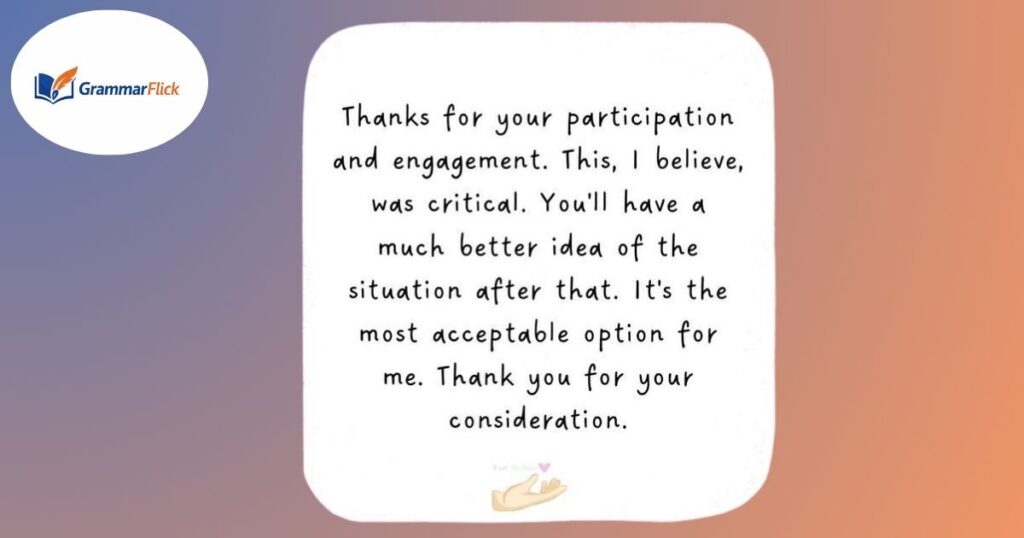
Using this expression conveys respect, thoughtfulness, and professionalism, helping to leave a positive impression. It is an effective way to close a message while showing that you value the recipient’s time and careful evaluation.
I Value Your Time and Effort
The phrase “I value your time and effort” is a respectful way to acknowledge someone’s dedication and support. It can be used in professional emails, after meetings, or when receiving guidance, feedback, or assistance. By expressing this sentiment, you show that you recognize the importance of the other person’s contributions and the effort they invested on your behalf.
Using this phrase demonstrates gratitude, professionalism, and thoughtfulness, helping to strengthen relationships and leave a positive, lasting impression in both personal and workplace communications.
Final Words
The phrase “thank you for your consideration” is a simple yet powerful way to express gratitude and respect in professional and formal communications. It acknowledges the time, attention, and effort someone has given to review your request, application, or proposal.
While commonly used in job applications, emails, and business correspondence, it can also be adapted for personal or casual contexts. Using this phrase appropriately shows professionalism, courtesy, and appreciation, leaving a positive impression on the recipient. It serves as a thoughtful closing that reinforces respect and maintains polite, effective communication in any interaction.
FAQs
What is Another Way to Say Thank You for your consideration?
Another way to say “Thank you for your consideration” is “I appreciate your time and attention.” It conveys gratitude politely while keeping it professional. You can also say “Thank you for reviewing my application” in formal contexts.
How can I make “Thank You for your Consideration” Sound More Personal?
You can add a specific reference, e.g., “Thank you for your consideration of my application for the marketing role. I truly value your time and feedback.”