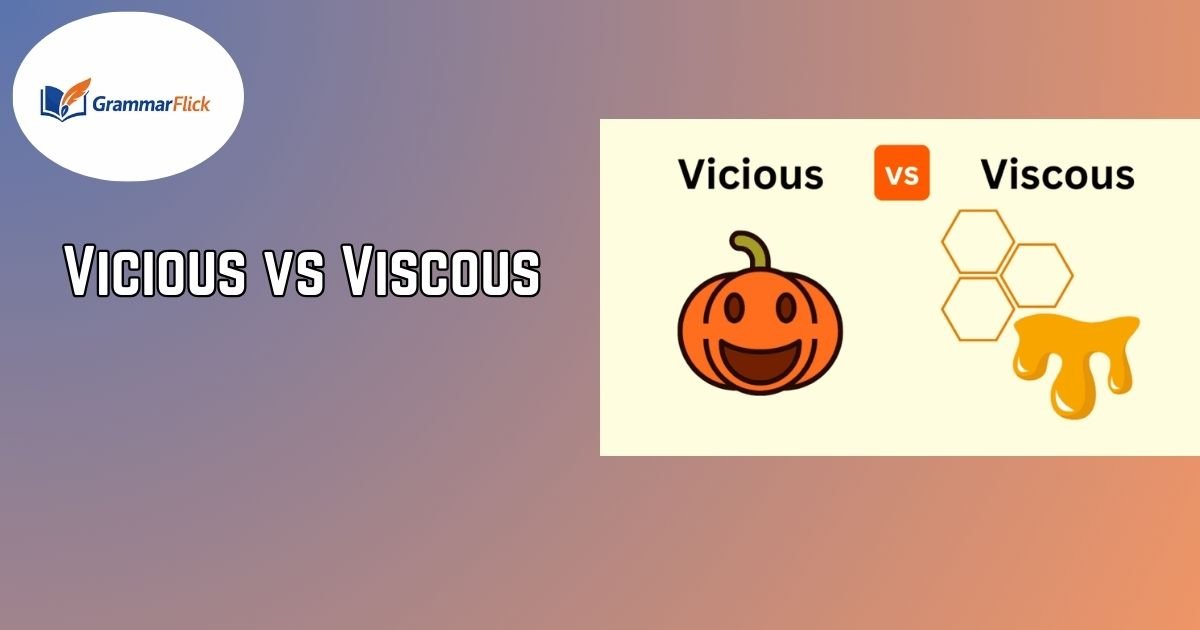
Vicious vs Viscous: What’s the Difference? Meaning, Examples, and Common Mistakes Explained
English is full of tricky word pairs that look similar but mean completely different things, and vicious vs viscous is a classic example. Because these two words differ by only one letter, many people mix them up in writing and speech. Using the wrong word can completely change the meaning of your sentence and even make it sound unintentionally funny or confusing.
The word vicious is all about cruelty, violence, or harmful behavior, while viscous is a scientific and descriptive term used to explain how thick or sticky a liquid is. One describes attitude and behavior; the other describes physical texture. In this guide, we’ll break down vicious vs viscous in simple language, with definitions, examples, comparisons, memory tips, and common mistakes so you never confuse them again.
What Does Vicious Mean?
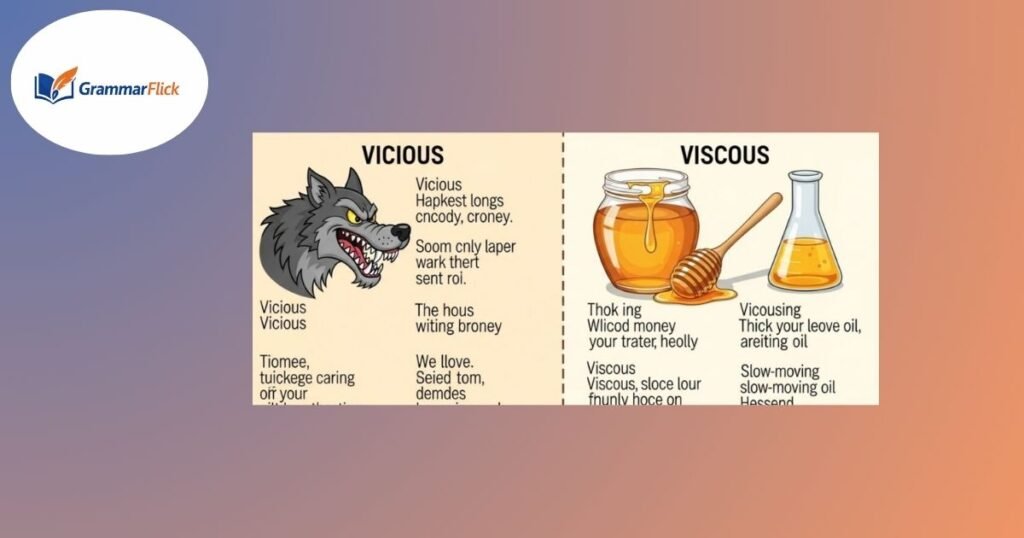
Vicious means showing cruelty, violence, or deliberate intent to cause harm. It is commonly used to describe aggressive behavior, harsh actions, or damaging words directed at people or animals. The term also applies to situations, such as a vicious cycle, where negative events repeat and worsen over time.
In everyday language, vicious carries a strong negative tone and suggests a lack of compassion or control. Using vicious correctly helps convey intensity, hostility, and harmful intent clearly in both spoken and written communication.
What Does Viscous Mean?
Viscous means having a thick, sticky consistency that resists flowing easily. It is commonly used to describe liquids such as honey, oil, syrup, or lava that move slowly compared to water. In science and everyday language, viscosity refers to a fluid’s internal resistance, also known as viscosity.
The higher the viscosity, the thicker the substance. Using viscous accurately helps explain texture, movement, and physical properties clearly, especially in technical, scientific, and descriptive writing contexts.
Why Do People Confuse Vicious and Viscous?
People confuse vicious and viscous mainly because they look and sound very similar, differing by only one letter. Both words are adjectives, which adds to the confusion, especially for non-native English speakers.
Auto-correct and spellcheck tools may also fail to catch the error when the wrong word is used in context. Fast typing and unfamiliarity with their distinct meanings cause mistakes. Understanding that vicious relates to cruelty while viscous describes liquid thickness helps avoid confusion.
Vicious vs Viscous in Real-Life Contexts
Vicious is used to describe cruel behavior, violent actions, harsh criticism, or damaging cycles, such as a vicious argument or attack. In contrast, viscous is used for physical substances, especially liquids like oil, honey, or lava that flow slowly. Recognizing the context is key: emotions and harm point to viscous, while thickness and fluid movement clearly indicate viscous.
Vicious in Literature and Media
In literature and media, vicious is often used to depict characters, actions, or situations that are cruel, aggressive, or morally corrupt. Writers use viciousness to create tension, highlight conflict, and develop antagonists, making stories more compelling and emotionally impactful. From a vicious villain in a novel to vicious commentary in journalism, the word conveys intensity and danger.
Its use extends to movies, television, and news media, emphasizing hostility, brutality, or destructive patterns. Understanding vicious in these contexts helps readers and writers recognize emotional weight, character motivation, and narrative stakes, enhancing both comprehension and storytelling.
Viscous in Scientific Papers and Cookbooks
In scientific papers and cookbooks, viscous is a key term used to describe the thickness and flow properties of liquids. In physics, chemistry, and engineering, scientists use viscous to measure a fluid’s resistance to movement, such as oils, polymers, or molten materials. Chefs refer to sauces, syrups, and batters as viscous to indicate texture, pourability, and consistency.
Accurate use of viscous ensures clarity in technical writing, recipes, and instructions, helping readers understand how a substance behaves. Unlike vicious, viscous focuses solely on physical properties, making it essential for precision in science and culinary contexts.
Read More: Orgo Slang Explained: Meaning, Origins, Common Terms, Examples
Can Vicious and Viscous Ever Be Interchangeable?
Vicious and viscous are never interchangeable because they belong to entirely different semantic fields. Vicious is rooted in moral and emotional judgment, often used in psychology, sociology, and media to describe harmful intent, hostility, or destructive patterns.
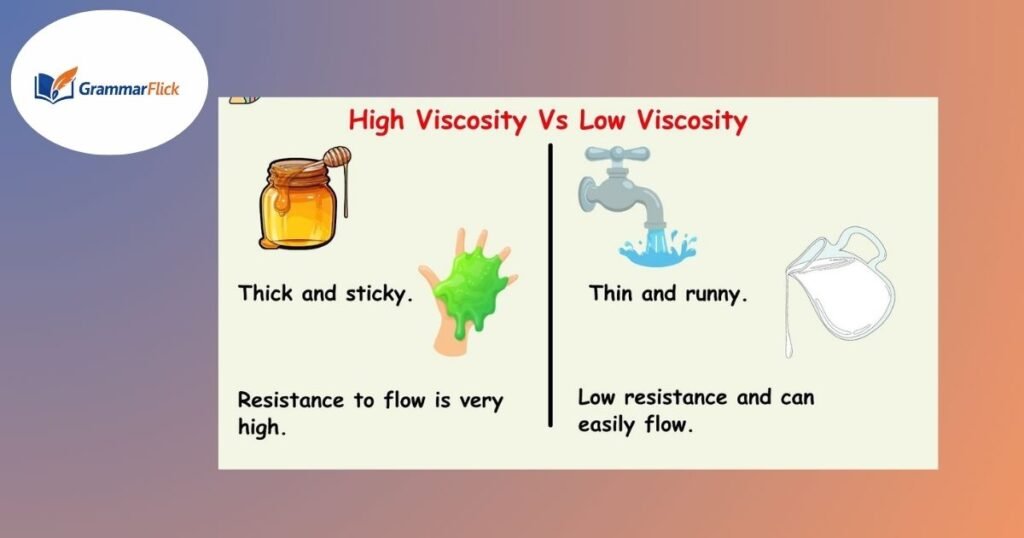
Viscosity, on the other hand, is a technical term used in physics, chemistry, cooking, and engineering to measure a fluid’s resistance to flow. Interestingly, viscous often appears in formal or academic writing, while vicious is more common in storytelling and news reports. Mixing them up can weaken clarity, credibility, and reader trust.
Synonyms and Alternatives of Vicious
- Cruel
- Brutal
- Savage
- Ferocious
- Malicious
- Violent
- Ruthless
- Hostile
- Aggressive
- Mean-spirited
- Nasty
- Merciless
- Barbaric
- Fierce
- Spiteful
Synonyms and Alternatives of Viscous
- Thick
- Sticky
- Syrupy
- Gummy
- Gluey
- Dense
- Slimy
- Gel-like
- Oily
- Molten
- Semi-fluid
- Heavy
- Sludgy
- Goopy
- Treacly
Common Mistakes to Avoid
When using vicious and viscous, several common mistakes can confuse readers and weaken writing. Many people mistakenly use vicious to describe liquids, such as saying “vicious syrup,” or use viscous for harmful behavior, like “a viscous attack.” Others rely on spellcheck, which may not catch context errors.
Another frequent error is assuming the words are interchangeable because they look similar. To avoid these mistakes, remember that vicious relates to cruelty, aggression, or harm, while viscous describes thickness and slow-flowing liquids. Correct usage improves clarity, professionalism, and credibility in writing.
Wrapping Up: The Viscous Nature of Vicious Words
Vicious and viscous may look alike, but their meanings move in entirely different directions. Vicious describes aggression, cruelty, or harmful language that can damage relationships and escalate conflict. Viscous, by contrast, explains the physical quality of thickness in liquids, often used in scientific or descriptive contexts.
Confusing the two can distract readers and weaken your message. By paying attention to context, emotion versus texture, you can choose the correct word every time. Clear distinctions like this make writing more accurate, professional, and engaging for readers.
FAQs
In which Contexts is each Word Used In?
Vicious is used in everyday language, literature, and media to describe cruelty, aggression, or harmful behavior. Viscous is used in science, cooking, and engineering to describe thick, sticky liquids. They are never interchangeable.
Is Vicious Ever used scientifically?
“Vicious” is rarely used in scientific contexts and usually only metaphorically, such as describing a “vicious cycle” in economics or biology. It does not describe physical properties. For scientific descriptions of thickness or stickiness, “viscous” is the correct term.