
Helpful Science Words That Start With H: Meanings and Importance
Science words that start with H are widely used in biology, chemistry, physics, astronomy, and health sciences. These terms help students, teachers, and researchers understand important scientific concepts and discoveries. Words like “habitat,” “hydrogen,” “hormone,” and “helium” are commonly used in classrooms and laboratories around the world.
Each word has a unique meaning and plays an important role in modern science. Learning science vocabulary improves knowledge, communication, and understanding of scientific topics. Whether you are studying nature, the human body, space, or energy, science words beginning with H are essential for exploring and understanding the world around us.
List Of Science Words That Start WITH H
- Hydrogen
- Habitat
- Hypothesis
- Helium
- Homeostasis
- Heliocentric model
- Hormones
- Hydrosphere
- Hybridization
- Hydraulics
Hydrogen
Hydrogen is the lightest and most abundant element in the universe, making it essential in astronomy, chemistry, and energy science. It fuels stars through nuclear fusion, producing the energy that powers galaxies. On Earth, hydrogen is used in fuel cells, fertilizers, and industrial processes.
Its single proton and electron make it a key element for studying atomic structure and chemical bonding. Hydrogen also plays a major role in water formation and organic molecules, forming the basis of life. Because of its versatility and abundance, hydrogen remains one of the most important scientific terms beginning with H.
Habitat
A habitat is the natural environment where an organism lives, grows, and interacts with other species. It includes physical factors like temperature, water, soil, and light, as well as biological factors such as predators and food sources. Scientists study habitats to understand ecosystems, biodiversity, and species survival.
Habitats can range from forests and oceans to deserts and wetlands, each supporting unique life forms. Human activities often impact habitats, leading to conservation efforts aimed at protecting endangered species. Understanding habitats helps ecologists preserve natural environments and maintain ecological balance across the planet.
Read More: Science Words That Start With K: Key Terms, Meanings, and Their Importance in Science
Hypothesis
A hypothesis is a testable explanation or prediction based on observations, forming the foundation of the scientific method. Scientists use hypotheses to guide experiments, analyze data, and draw conclusions. A good hypothesis is specific, measurable, and falsifiable, meaning it can be proven wrong through testing.
Hypotheses help researchers explore relationships between variables, identify patterns, and develop theories. They are essential in fields such as biology, physics, psychology, and environmental science. By forming and testing hypotheses, scientists advance knowledge and refine understanding of natural phenomena, making this term central to scientific inquiry.
Helium
Helium is the second lightest element and a noble gas known for its stability and low reactivity. It is used in scientific research, medical imaging, cryogenics, and aerospace engineering. Helium’s low boiling point makes it ideal for cooling superconducting magnets in MRI machines and particle accelerators.
In astronomy, helium plays a major role in stellar evolution, forming through nuclear fusion in stars. Its unique properties also make it useful in gas chromatography and leak detection. Because helium is rare on Earth but abundant in space, it remains a valuable resource for science and technology.
Homeostasis
Homeostasis refers to the ability of living organisms to maintain stable internal conditions despite changes in the external environment. This includes regulating temperature, pH, hydration, and nutrient levels. Homeostasis is essential for survival, allowing cells and organs to function properly.
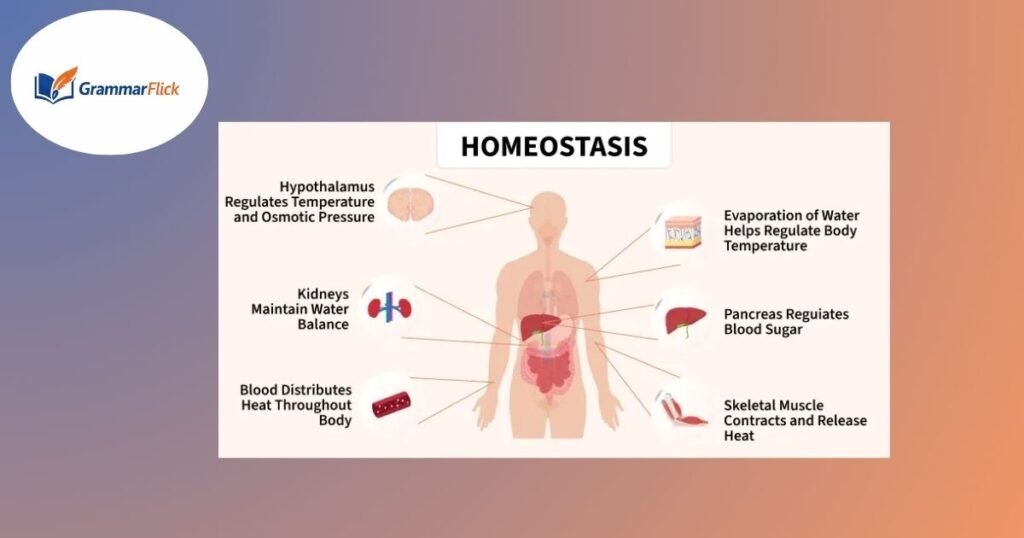
Biological systems use feedback mechanisms, such as sweating to cool the body or releasing hormones to balance glucose levels. Scientists study homeostasis to understand health, disease, and physiological processes. Disruptions in homeostasis can lead to illness, making it a key concept in medicine, biology, and physiology. It highlights the body’s remarkable ability to maintain balance.
Heliocentric Model
The heliocentric model is the astronomical theory that places the Sun at the center of the solar system, with planets orbiting around it. Proposed by Nicolaus Copernicus, this model revolutionized science by challenging the earlier geocentric view. The heliocentric model laid the foundation for modern astronomy, enabling scientists to understand planetary motion, gravity, and celestial mechanics.
It also influenced physics, navigation, and space exploration. By shifting humanity’s perspective of the universe, the heliocentric model marked a major turning point in scientific history and remains a fundamental concept in understanding how the solar system works.
Hormones
Hormones are chemical messengers produced by glands in the endocrine system. They regulate essential processes such as growth, metabolism, reproduction, and mood. Hormones travel through the bloodstream to target organs, triggering specific responses that maintain homeostasis.
Scientists study hormones to understand how the body communicates internally and how imbalances can lead to disorders like diabetes or thyroid disease. Hormones also influence behavior, stress responses, and development. Research in endocrinology helps improve treatments for hormonal conditions and enhances understanding of human biology. Hormones are vital for coordinating complex functions within living organisms.
Hydrosphere
The hydrosphere includes all the water on Earth, oceans, rivers, lakes, groundwater, glaciers, and atmospheric moisture. It plays a crucial role in climate regulation, weather patterns, and supporting life. Scientists study the hydrosphere to understand water cycles, ocean currents, and environmental changes.
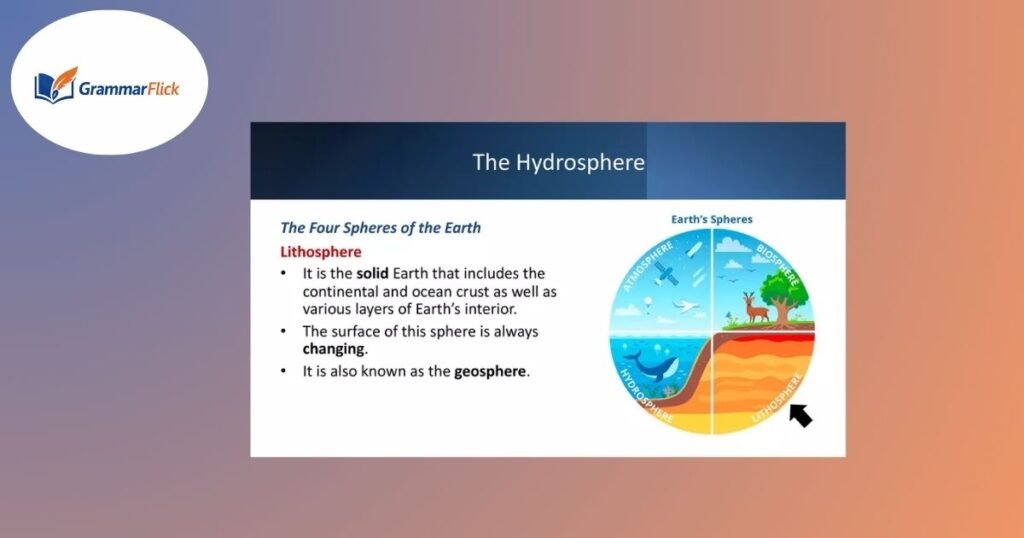
Water is essential for ecosystems, agriculture, and human survival, making the hydrosphere a key focus in environmental science. Changes in the hydrosphere, such as melting ice caps or rising sea levels, impact global climate and biodiversity. Understanding the hydrosphere helps researchers address environmental challenges and protect natural resources.
Hybridization (Chemistry)
In chemistry, hybridization refers to the mixing of atomic orbitals to form new hybrid orbitals that influence molecular shape and bonding. This concept helps explain the geometry of molecules like methane, carbon dioxide, and water. Hybridization allows scientists to predict bond angles, molecular polarity, and chemical reactivity.
It is essential for understanding organic chemistry, where carbon’s ability to hybridize leads to diverse molecular structures. Hybridization also supports research in materials science, nanotechnology, and pharmaceuticals. By understanding how atoms combine and form bonds, scientists can design new compounds and explore the behavior of matter at the molecular level.
Hydraulics
Hydraulics is the study of fluids in motion and their applications in engineering and technology. It focuses on how liquids transmit force, enabling machines like hydraulic lifts, brakes, and heavy construction equipment to operate efficiently. Hydraulics is essential in fields such as civil engineering, mechanical engineering, and physics.
Scientists use hydraulic principles to design dams, water systems, and energy‑efficient machinery. The study of hydraulics also helps explain natural phenomena like river flow, erosion, and ocean currents. Because fluids play a major role in both nature and technology, hydraulics remains a vital scientific discipline.
Final words
Science words that start with H span a wide range of fields, including chemistry, biology, physics, astronomy, and environmental science. From essential elements like hydrogen and helium to foundational concepts like homeostasis and the heliocentric model, these terms help scientists describe and understand the natural world.
Learning H‑words strengthens scientific vocabulary and deepens comprehension of key ideas. Whether you’re a student, educator, or researcher, exploring science words that start with H provides valuable insight into how science explains life, matter, energy, and the universe.
FAQs
What Biology Terms Start With H?
Biology includes several H‑words such as Habitat (living environment), Homeostasis (internal balance), Hormones (chemical messengers), and Hemoglobin (oxygen‑carrying protein). These terms help explain life processes and organism behavior.
What Earth Science Terms Start with H?
Earth science uses H‑words like Hydrosphere, Humidity, Horizon, and Hotspot. These terms help describe water systems, weather, and geological activity.
Are H‑words Common in Scientific Vocabulary?
Yes. Many foundational scientific terms begin with H, especially in chemistry and biology. They appear frequently in textbooks, research papers, and classroom discussions.