
Science Words That Start With B: Important Terms Used in Science
Science is full of interesting words that help explain the world around us. Many important science terms begin with the letter “B” and are used in biology, chemistry, physics, astronomy, and environmental science. Words like bacteria, biodiversity, buoyancy, and biome are common examples that students and researchers often study.
These terms help us understand living organisms, energy, matter, ecosystems, and natural processes. Learning science words that start with B can improve scientific vocabulary and make complex topics easier to understand. Whether you are a student, teacher, or science enthusiast, these words are useful in everyday learning and scientific discussions.
List of science words that start with B
- Biology
- Biochemistry
- Biotechnology
- Biodiversity
- Bacteriology
- Behavioral science
- Boiling point
- Biomagnatism
- Botany
- Bond energy
- Barning
- Base
- Buffer solution
- Biome
Biology
Biology is the scientific study of living organisms, from microscopic bacteria to massive blue whales. It explores how life forms grow, adapt, reproduce, and interact with their environments. Modern biology connects deeply with genetics, ecology, biotechnology, and medicine, shaping breakthroughs like gene editing and vaccine development.
Understanding biology helps us grasp how ecosystems function and how human actions influence biodiversity. It also provides the foundation for fields such as agriculture, conservation, and healthcare. As science advances, biology continues to reveal the complexity and interconnectedness of life on Earth, making it one of the most essential scientific disciplines.
Biochemistry
Biochemistry blends biology and chemistry to study the chemical processes that power living organisms. It focuses on molecules like proteins, lipids, carbohydrates, and nucleic acids, explaining how they interact to sustain life. Biochemists investigate metabolism, enzyme activity, cellular communication, and genetic expression. This field is crucial for developing pharmaceuticals, diagnosing diseases, and understanding nutrition.
Biochemistry also drives innovations in biotechnology, such as synthetic biology and metabolic engineering. By revealing how molecular systems operate, biochemistry helps scientists design targeted therapies and improve human health. Its insights continue to transform medicine, agriculture, and environmental science.
Biotechnology
Biotechnology uses living organisms, cells, or biological systems to develop new technologies and products. It includes genetic engineering, cloning, fermentation, and bio‑manufacturing. Biotech innovations have revolutionized medicine through gene therapies, vaccines, and personalized treatments. In agriculture, biotechnology enables pest‑resistant crops and improved yields.
Environmental biotechnology helps clean pollution using microbes that break down toxins. Industrial biotechnology produces sustainable materials, enzymes, and biofuels. As the world seeks greener solutions, biotechnology plays a growing role in shaping a healthier, more sustainable future. Its applications continue expanding across healthcare, food production, and environmental protection.
Biodiversity
Biodiversity refers to the variety of life on Earth, including species, genes, and ecosystems. High biodiversity strengthens ecosystems by improving resilience, productivity, and stability. It supports essential services like pollination, water purification, and climate regulation. Human activities, such as deforestation, pollution, and climate change, threaten biodiversity at alarming rates.
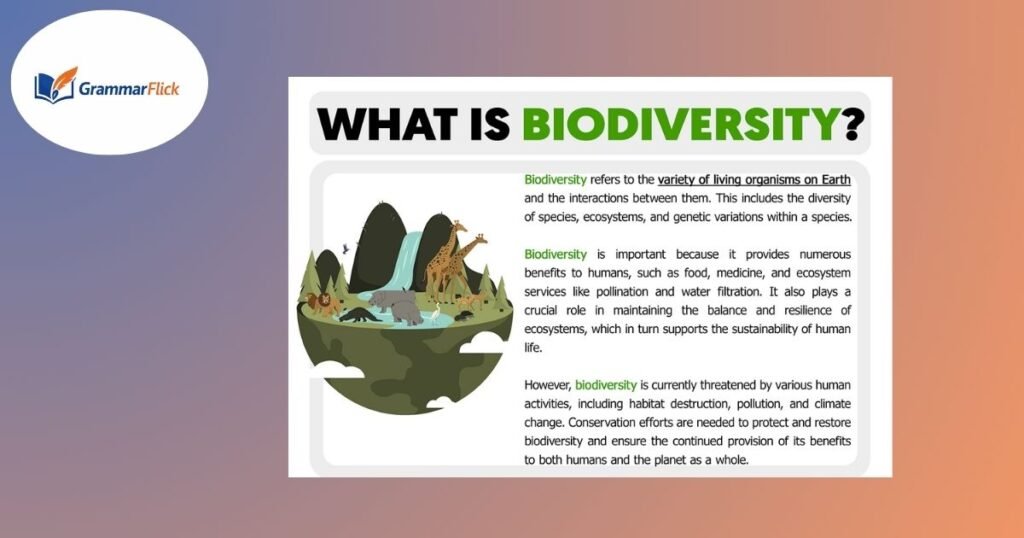
Protecting biodiversity ensures food security, medical discoveries, and ecological balance. Conservation efforts such as protected areas, habitat restoration, and sustainable resource management help preserve life’s richness. Biodiversity is not just about saving species; it’s about maintaining the natural systems that support human survival and global well‑being.
Bacteriology
Bacteriology is the branch of microbiology that studies bacteria, their structure, function, classification, and role in ecosystems. Bacteria can be beneficial, such as those aiding digestion or nitrogen fixation, or harmful, causing diseases like tuberculosis and cholera. Bacteriologists investigate how bacteria grow, reproduce, and respond to antibiotics.
Their research guides the development of vaccines, antimicrobial drugs, and sanitation practices. Bacteriology also supports biotechnology, agriculture, and environmental science. Understanding bacteria is essential for public health, food safety, and combating antibiotic resistance, one of the most urgent global health challenges today.
Behavioral Science
Behavioral science examines how humans and animals make decisions, respond to stimuli, and interact socially. It blends psychology, neuroscience, sociology, and anthropology to understand behavior patterns. Researchers study motivation, learning, perception, and emotional responses.
Behavioral science informs fields like education, marketing, public health, and economics. For example, it helps design interventions that encourage healthier habits or improve workplace productivity. By analyzing how people think and act, behavioral science provides insights that shape policies, technologies, and social systems. Its findings help create environments that support well‑being, cooperation, and positive societal change.
Boiling Point
The boiling point is the temperature at which a liquid turns into a gas. It occurs when vapor pressure equals atmospheric pressure, allowing molecules to escape the liquid’s surface. Different substances have different boiling points based on molecular structure and intermolecular forces.
For example, water boils at 100°C at sea level but at lower temperatures at high altitudes due to reduced pressure. Boiling points are essential in chemistry, cooking, distillation, and industrial processes. Understanding boiling points helps scientists identify substances, design chemical reactions, and control manufacturing conditions with precision.
Biomagnetism
Biomagnetism studies the magnetic fields produced by living organisms. These fields arise from electrical activity in cells, especially neurons and muscles. Technologies like magnetoencephalography (MEG) and magnetocardiography (MCG) measure these fields to diagnose neurological and cardiac conditions.
Biomagnetism also explores how animals use Earth’s magnetic field for navigation, such as migratory birds and sea turtles. Research in this field contributes to medical imaging, neuroscience, and bioengineering. As detection tools become more sensitive, biomagnetism continues to reveal new insights into biological processes and the subtle electromagnetic interactions within living systems.
Botany
Botany is the scientific study of plants, including their structure, growth, reproduction, and evolution. Botanists investigate everything from microscopic algae to towering trees. Plants are essential for life on Earth, producing oxygen, food, medicine, and raw materials. Botany helps scientists understand ecosystems, climate change, and sustainable agriculture.

It also supports conservation efforts by identifying endangered species and restoring habitats. Advances in plant genetics and biotechnology have expanded botany’s role in developing resilient crops and renewable resources. As global challenges grow, botany remains vital for environmental health and human survival.
Read More: Helpful Science Words That Start With H: Meanings and Importance
Bond Energy
Bond energy is the amount of energy required to break a chemical bond between atoms. It reflects the strength and stability of molecules. Higher bond energy means a stronger bond that requires more energy to break. Understanding bond energy helps chemists predict reaction behavior, energy changes, and molecular stability.
It plays a key role in combustion, metabolism, and material science. For example, breaking carbon‑hydrogen bonds releases energy that fuels living organisms and engines. Bond energy also guides the design of new materials, pharmaceuticals, and chemical processes by revealing how atoms interact.
Burning
Burning, or combustion, is a chemical reaction between a fuel and oxygen that releases heat and light. It involves breaking chemical bonds in the fuel and forming new bonds in the products, typically carbon dioxide and water. Combustion powers engines, generates electricity, and heats homes.
Incomplete burning can produce pollutants like carbon monoxide and soot. Understanding combustion helps engineers design cleaner, more efficient energy systems. It also informs fire safety, environmental science, and climate research. As the world shifts toward renewable energy, studying combustion remains important for improving existing technologies.
Base Pair
Base pairs are the building blocks of DNA and RNA, formed by complementary nitrogenous bases. In DNA, adenine pairs with thymine, and cytosine pairs with guanine. These pairs create the double‑helix structure and store genetic information. Base pairing ensures accurate replication during cell division and guides protein synthesis.
Mutations in base pairs can lead to genetic disorders or evolutionary changes. Understanding base pairs is essential for genetics, biotechnology, and medicine. Techniques like DNA sequencing, CRISPR gene editing, and forensic analysis rely on precise knowledge of how base pairs function.
Buffer Solution
A buffer solution resists changes in pH when small amounts of acid or base are added. It typically contains a weak acid and its conjugate base or a weak base and its conjugate acid. Buffers are essential in biological systems, where enzymes require stable pH levels to function properly.
They are also used in laboratories, pharmaceuticals, and industrial processes. For example, blood contains a bicarbonate buffer system that maintains pH around 7.4. Understanding buffers helps scientists design experiments, preserve biological samples, and ensure chemical reactions proceed under controlled conditions.
Biome
A biome is a large ecological region characterized by specific climate conditions, plant life, and animal communities. Examples include deserts, rainforests, tundra, and grasslands. Biomes shape global biodiversity and influence weather patterns, nutrient cycles, and ecosystem services.
Scientists study biomes to understand how climate change affects species distribution and ecological balance. Human activities such as deforestation and pollution threaten many biomes, reducing their ability to support life. Protecting biomes is essential for preserving natural resources, maintaining climate stability, and ensuring the survival of countless species, including humans.
Final words
Science words that start with B, such as biology, biochemistry, biodiversity, biotechnology, and botany, show how deeply the letter B shapes scientific language and discovery. These terms cover life sciences, chemistry, ecology, genetics, and environmental studies, proving that “B‑words” are both broad and foundational.
Understanding them strengthens scientific vocabulary, improves academic writing, and deepens appreciation for how science explains the world. Whether you’re a student, researcher, or curious learner, exploring these words builds stronger knowledge and sparks curiosity for further learning across all scientific fields.
FAQs
Why are B‑Science Words Important?
Many foundational scientific concepts begin with B. Words like biology and biotechnology shape entire fields, while terms like boiling point and bond energy are essential in chemistry. Learning these words strengthens scientific vocabulary and improves understanding of how the natural world works.
What B‑Science Words Relate to the Environment?
Environmental science uses terms like biodiversity, biome, biosphere, bioindicator, and biodegradable. These words help describe ecosystems, species interactions, and environmental health. For more environmental terms, check biodiversity.