
Top Science Words That Start With T: Meaning, Uses, and Importance in Modern Science
Science is full of fascinating terminology, and many important Science Words That Start With T, from fundamental ideas like time, temperature, and theory to advanced scientific terms such as thermodynamics, transcription, and taxonomy. These words help explain how the natural world works.
Each term carries a specific meaning that contributes to fields like physics, biology, chemistry, and environmental science. Understanding science words that start with T not only improves vocabulary but also strengthens comprehension of complex scientific ideas. In this article, we will explore their meanings, uses, and importance in modern science and everyday applications in simple and clear language.
List of Science words that start with T
- Temperature
- Thermodynamics
- Tectonic plates
- Taxonomy
- Transpiration
- Titration
- Telescope
- Tissue
- Turbulance
- Trait
- Toxicology
- Turbin
- Transcription
- Torque
- Tropism
Temperature
Temperature is one of the most fundamental scientific concepts, describing the average kinetic energy of particles within a substance. It influences chemical reactions, biological processes, weather patterns, and the behavior of matter in every state. Scientists measure temperature using scales such as Celsius, Fahrenheit, and Kelvin, with Kelvin being the standard in scientific research.
Understanding temperature helps explain why materials expand, contract, melt, or freeze. It also plays a crucial role in thermodynamics, energy transfer, and climate science. Without temperature as a measurable quantity, predicting natural phenomena or designing technology would be nearly impossible.
Read More: Top Science Words That Start With S: Definitions, Examples, and Their Importance in Modern Science
Thermodynamics
Thermodynamics is the branch of physics that studies heat, energy, and the laws governing their interactions. It includes four major laws that explain how energy moves, transforms, and affects matter. These laws help scientists understand engines, refrigerators, chemical reactions, and even the evolution of the universe.
Thermodynamics also explains why perpetual motion machines are impossible and why energy efficiency matters. In chemistry, it predicts whether reactions will occur spontaneously. In biology, it helps explain metabolism and energy use in living organisms. Thermodynamics is essential for engineering, environmental science, and nearly every technological advancement.
Tectonic Plates
Tectonic plates are massive slabs of Earth’s lithosphere that float on the semi‑fluid asthenosphere beneath them. Their movement shapes the planet’s surface, creating mountains, earthquakes, volcanoes, and ocean trenches. The theory of plate tectonics revolutionized geology by explaining continental drift and the formation of landforms.
When plates collide, they can form mountain ranges; when they pull apart, they create new crust. Transform boundaries cause earthquakes, such as those along the San Andreas Fault. Understanding tectonic plates helps scientists predict geological hazards and study Earth’s long‑term evolution.
Taxonomy
Taxonomy is the scientific system of classifying living organisms based on shared characteristics. It organizes life into hierarchical categories such as domain, kingdom, phylum, class, order, family, genus, and species. This system helps biologists identify, name, and study organisms in a structured way.
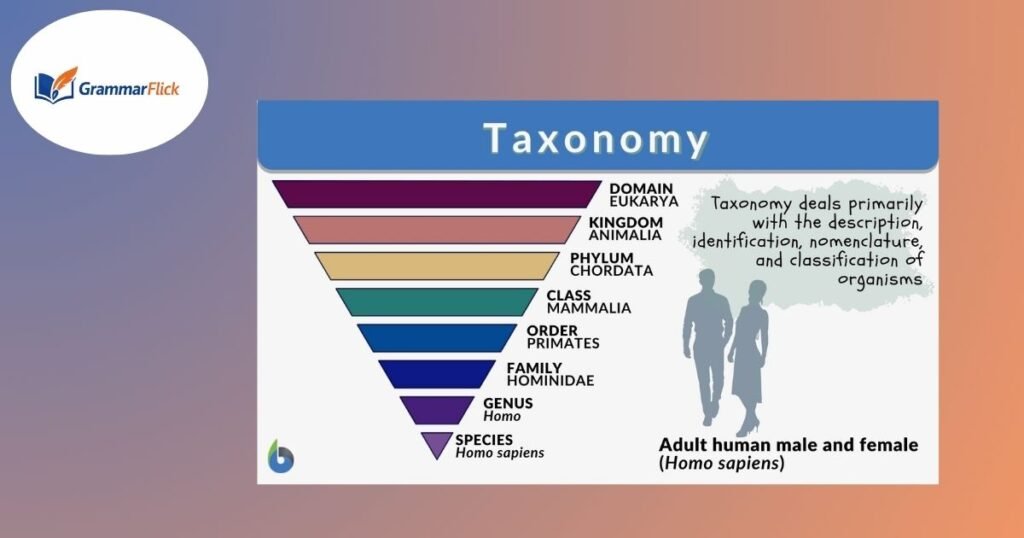
Taxonomy also reveals evolutionary relationships, showing how species are connected through common ancestors. Modern taxonomy uses genetics and molecular biology to refine classifications. Without taxonomy, studying biodiversity, conservation, and ecological interactions would be chaotic and inconsistent.
Transpiration
Transpiration is the process by which plants release water vapor from their leaves into the atmosphere. It plays a vital role in the water cycle, helping regulate temperature and maintain moisture levels in ecosystems. Through transpiration, plants draw water and nutrients from the soil, supporting growth and photosynthesis.
This process also cools the plant, similar to how sweating cools humans. Environmental factors such as humidity, temperature, and wind influence transpiration rates. Understanding transpiration is essential for agriculture, climate science, and environmental management.
Titration
Titration is a laboratory technique used in chemistry to determine the concentration of an unknown solution by reacting it with a known solution. It involves adding a titrant to an analyte until a reaction reaches its endpoint, often indicated by a color change.
Titration is crucial in pharmaceuticals, environmental testing, food science, and water quality analysis. It allows scientists to measure acidity, alkalinity, and chemical purity with high precision. Mastering titration helps students understand stoichiometry, reaction rates, and analytical chemistry.
Telescope
A telescope is an optical instrument that magnifies distant objects, allowing astronomers to observe stars, planets, galaxies, and other celestial bodies. Telescopes use lenses or mirrors to gather and focus light, revealing details invisible to the naked eye.
Modern telescopes include radio, infrared, and space‑based versions like the Hubble Space Telescope. They have transformed our understanding of the universe, enabling discoveries about black holes, exoplanets, and cosmic expansion. Telescopes continue to push the boundaries of astronomy and inspire scientific exploration.
Tissue
Tissue refers to a group of similar cells working together to perform a specific function. Animals have four main tissue types: epithelial, connective, muscle, and nervous tissue. Plants have meristematic and permanent tissues. Tissues form organs, which then form organ systems, creating the structure of living organisms.
Studying tissues helps scientists understand diseases, development, and the functioning of the human body. Tissue engineering and regenerative medicine use this knowledge to create artificial organs and repair damaged tissues.
Turbulence
Turbulence describes chaotic, irregular fluid motion found in air, water, and gases. It plays a major role in weather patterns, ocean currents, and aerodynamics. Turbulence affects airplane flights, causing sudden changes in air pressure and movement.
Scientists study turbulence to improve aircraft design, predict storms, and understand energy transfer in fluids. Despite being common, turbulence is one of the most complex phenomena in physics, involving nonlinear equations and unpredictable behavior. Its study remains a major challenge in fluid dynamics.
Trait
A trait is a characteristic or feature of an organism, determined by genetics, environment, or both. Traits include physical features like eye color, height, and leaf shape, as well as behavioral and physiological characteristics.
Genetics explains how traits are inherited through DNA and passed from parents to offspring. Understanding traits helps scientists study evolution, natural selection, and genetic disorders. In agriculture, trait analysis helps develop stronger, more productive crops. Traits form the foundation of biology and the study of life’s diversity.
Toxicology
Toxicology is the scientific study of poisons, toxins, and their effects on living organisms. It examines how harmful substances interact with biological systems, how they cause damage, and how exposure can be prevented or treated.
Toxicologists analyze chemicals in food, water, medicine, and the environment to ensure safety. This field is essential for public health, environmental protection, and pharmaceutical development. Toxicology also helps determine safe dosage levels and identify potential risks associated with new products or pollutants.
Turbine
A turbine is a machine that converts kinetic energy from fluids such as wind, water, or steam into mechanical energy. Turbines power electricity generation in wind farms, hydroelectric dams, and power plants. They are essential for renewable energy production and reducing dependence on fossil fuels.

Turbines operate using blades that spin when struck by moving fluid, driving a generator to produce electricity. Engineers study turbine efficiency, aerodynamics, and materials to improve performance and sustainability. Turbines are central to modern energy systems.
Transcription
Transcription is the biological process in which DNA is used as a template to create messenger RNA (mRNA). This step is essential for gene expression, allowing cells to produce proteins that carry out vital functions.
Transcription occurs in the nucleus of eukaryotic cells and involves enzymes such as RNA polymerase. Understanding transcription helps scientists study genetic diseases, develop gene therapies, and explore how cells respond to environmental changes. It is a cornerstone of molecular biology and biotechnology.
Torque
Torque is a measure of rotational force applied to an object. It determines how effectively something can rotate around an axis, such as a wheel, gear, or lever. Torque is essential in physics, engineering, and mechanics, influencing the design of engines, machines, and tools.
High torque allows vehicles to accelerate quickly or move heavy loads. Scientists calculate torque using force and distance from the pivot point. Understanding torque helps improve mechanical efficiency and design safer, more powerful systems.
Tropism
Tropism refers to the directional growth response of plants to environmental stimuli such as light, gravity, or touch. Phototropism causes plants to grow toward light, while gravitropism directs roots downward. These responses help plants survive by optimizing access to resources.
Tropisms are controlled by plant hormones like auxins, which regulate cell growth. Studying tropism helps scientists understand plant behavior, agriculture, and ecosystem dynamics. It also reveals how plants adapt to changing environments and stress conditions.
Final Words
Science words that start with T reveal just how diverse and interconnected scientific knowledge truly is. From concepts that explain the physical world, like temperature, thermodynamics, and torque, to biological processes such as transpiration, transcription, and tropism, each term contributes to a deeper understanding of how nature operates.
These words also highlight the importance of scientific classification, measurement, and discovery, reminding us that even a single letter can open the door to vast fields of study. Exploring these T‑words strengthens scientific literacy, supports academic learning, and encourages curiosity about the world around us.
FAQs
Why Are Science Words That Start With T Important?
Many T‑words represent foundational scientific concepts. For example, temperature affects all physical and chemical processes, thermodynamics explains energy flow, and taxonomy organizes living organisms. These terms help students and researchers communicate ideas clearly and accurately.
Which T‑word is Most Commonly Used in Science?
Temperature is one of the most frequently used scientific terms because it applies to chemistry, physics, biology, meteorology, and environmental science. It influences reactions, weather, energy transfer, and living systems.