TSTS Meaning in Text Explained: Definition, Uses & Examples
In today’s fast-paced digital world, new slang terms pop up almost daily, making online communication more dynamic and sometimes confusing. One such term that has caught attention recently is “TSTS.” If you’ve come across this abbreviation in a text message, social media comment, or chat conversation and wondered what it means, you’re not alone.
Slang like TSTS can have multiple meanings depending on context, tone, and platform. Understanding these nuances can help you communicate more effectively and avoid misunderstandings. This in-depth guide will explain TSTS Meaning in text, its origins, different interpretations, examples, usage tips, and more. By the end, you’ll feel confident using or responding to TSTS in any conversation.
What Does TSTS Mean in Text?
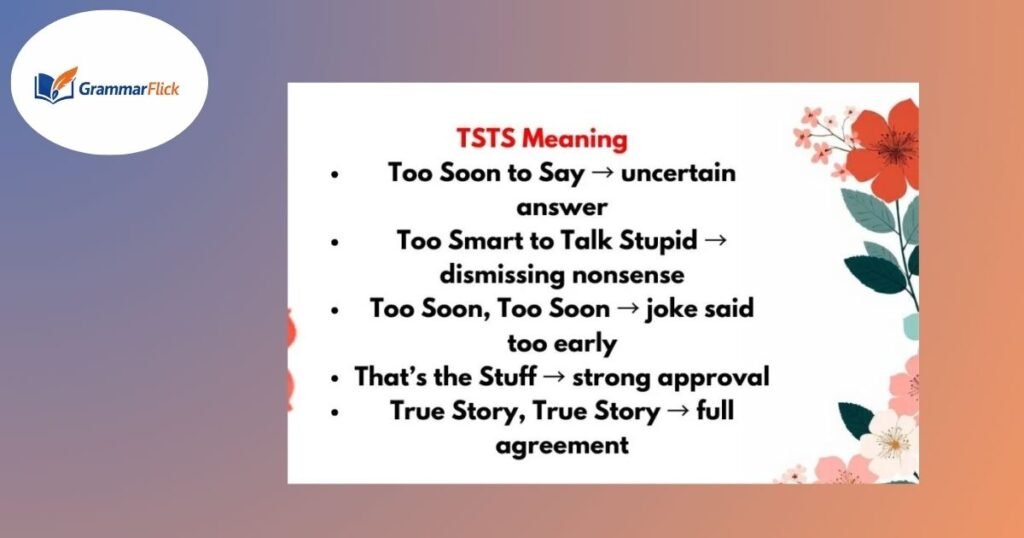
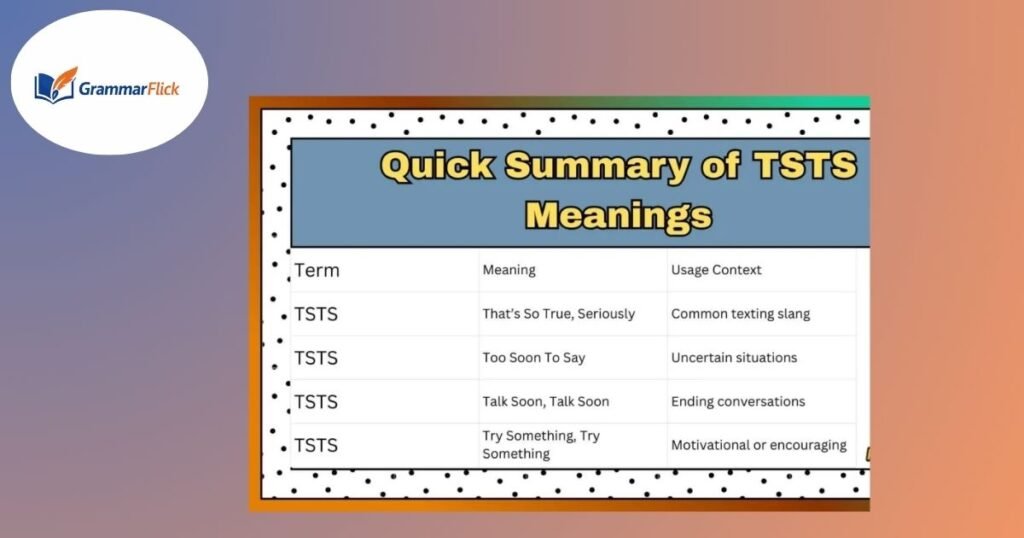
TSTS is a modern texting acronym that can have multiple meanings depending on the context of the conversation. The most common meaning is “Too Smart To Say,” often used in a playful or sarcastic way when someone avoids giving a direct answer.
It can also mean “Too Stressed To Speak,” expressing emotional overwhelm, or “Too Shy To Say,” when someone feels hesitant to share their thoughts. In some cases, it even stands for “That’s So True, Seriously,” showing strong agreement. Because of its flexibility, understanding the tone and situation is essential to interpret TSTS correctly in messages.
The Origin of TSTS in Texting
The exact origin of TSTS in texting is not clearly documented, but like many internet acronyms, it likely emerged organically from online communication. As messaging apps and social media platforms became more popular, users began shortening phrases to save time and effort. TSTS follows the same trend as widely known abbreviations like LOL or BRB.
It is believed to have gained traction among younger users, especially in casual chats, gaming communities, and social media comments. Its multiple meanings developed naturally, allowing people to use it in different emotional and conversational contexts.
Read More: HN Meaning in Text: The Ultimate Guide to Understanding This Popular Slang
Different Meanings of TSTS Explained
TSTS is unique because it carries several meanings, each suited to a different situation. “Too Smart To Say” is used when someone avoids stating something obvious or wants to be playful. “Too Stressed To Speak” reflects emotional pressure or mental exhaustion, often used during tough moments.
“Too Shy To Say” is common in romantic or personal conversations when someone feels hesitant. Another meaning, “That’s So True, Seriously,” is used to strongly agree with someone’s statement. These variations make TSTS a flexible and expressive slang term, but they also require careful attention to context for accurate understanding.
Why TSTS Is Becoming Popular
TSTS is becoming popular because it perfectly matches the fast-paced nature of modern texting. People prefer short and expressive acronyms that save time while still conveying emotions clearly. It also adds a playful or mysterious tone to conversations, making chats more engaging and less direct.
Social media platforms and messaging apps have further boosted their usage, especially among younger users who enjoy creative slang. TSTS allows people to express feelings indirectly, which can feel more comfortable in certain situations. Its flexibility and multiple meanings make it appealing, helping it spread quickly across different online communities.
How to Identify the Correct Meaning of TSTS
Understanding the correct meaning of TSTS depends heavily on context. Start by looking at the tone of the conversation. If it’s playful, it likely means “Too Smart To Say,” while in emotional situations, it could mean “Too Stressed To Speak” or “Too Shy To Say.”
Pay attention to emojis, as they often hint at the intended meaning. The relationship between the people chatting also matters, since close friends may use it jokingly. Consider the topic being discussed. By combining these clues, you can accurately interpret what TSTS means and avoid misunderstandings in conversations.
Examples of TSTS in Text Conversations
TSTS can be used in different ways depending on the situation. For example, in a playful chat: “Do you think I’m right?” “TSTS,” which means “Too Smart To Say.” In a stressful moment: “Why are you so quiet?” “TSTS,” meaning “Too Stressed To Speak.”
In a shy or romantic context: “Do you like them?” “TSTS,” suggesting “Too Shy To Say.” It can also show agreement: “That was the best movie ever!” “TSTS,” meaning “That’s So True, Seriously.” These examples show how versatile TSTS is in everyday texting.
TSTS on Social Media Platforms
TSTS is widely used across social media platforms like Instagram, TikTok, Snapchat, and WhatsApp, where short and catchy expressions are popular. People often include TSTS in captions, comments, or replies to add humor, mystery, or emotional depth.
For example, someone might post a story with the caption “Some things are better left unsaid… TSTS,” creating curiosity among viewers. It is also used in comment sections to react indirectly without giving a full explanation. Its flexibility makes it perfect for social media, where users prefer quick, expressive communication that keeps interactions engaging and relatable.
When to Use TSTS in Texting
TSTS is best used in casual and friendly conversations where tone and context are easy to understand. You can use it when you want to be playful or tease someone without giving a direct answer. It’s also helpful when you feel shy or uncomfortable expressing something openly, allowing you to hint at your thoughts instead.
TSTS works well when you are stressed and don’t want to explain everything in detail. It can also be used to strongly agree with someone in a relaxed way. It’s ideal for informal chats with friends or people familiar with texting slang.
When NOT to Use TSTS
While TSTS is useful, there are situations where it should be avoided. It is not appropriate in professional or formal communication, such as emails, workplace chats, or academic discussions, as it may seem unclear or unprofessional.
You should also avoid using it with people who may not understand texting slang, as it can lead to confusion. In serious or sensitive conversations, using TSTS might come across as dismissive or unhelpful. If clear communication is important, it’s better to use full sentences instead of abbreviations to ensure your message is understood correctly.
How to Respond to TSTS in Text
When someone sends “TSTS,” your response should match the tone of the conversation. If it seems playful or teasing, you can reply with humor like, “Haha, come on, just say it!” to keep the conversation fun.
If it feels mysterious, you might respond with curiosity, such as “Now I really want to know!” In more emotional contexts, where it may mean “Too Stressed To Speak,” a supportive reply like “Hey, are you okay?” or “I’m here if you want to talk” is more appropriate. You can also acknowledge it with “I get it” if you understand the implied meaning. Adapting your response ensures better communication.
Common Misunderstandings About TSTS
One of the biggest misunderstandings about TSTS is assuming it has only one fixed meaning, when in reality it can vary based on context. Many people misinterpret the tone, especially if there are no emojis or additional clues, leading to confusion. Another common issue is overusing TSTS, which can make conversations unclear or frustrating.
Some users may also confuse it with other acronyms or think it carries a negative meaning when it doesn’t. People unfamiliar with texting slang may not understand it at all. Being aware of these misunderstandings helps you use TSTS more effectively and avoid miscommunication.
TSTS vs Other Similar Slang Terms
- TSTS vs IDK (I Don’t Know): TSTS avoids answering indirectly, while IDK clearly shows uncertainty.
- TSTS vs TBH (To Be Honest): TSTS hides or hints at a thought, whereas TBH expresses it openly.
- TSTS vs NVM (Never Mind): TSTS suggests something unsaid, while NVM cancels or drops the topic.
- TSTS vs IMO (In My Opinion): TSTS avoids giving an opinion, but IMO directly shares one.
- TSTS vs SMH (Shaking My Head): TSTS is subtle and indirect, while SMH shows clear disappointment.
- TSTS vs LOL (Laugh Out Loud): TSTS adds mystery or emotion, whereas LOL simply expresses laughter.
- TSTS vs BRB (Be Right Back): TSTS relates to emotions or thoughts, while BRB indicates a temporary absence.
- TSTS vs IDC (I Don’t Care): TSTS implies hesitation or indirectness, while IDC shows a direct lack of interest.
- TSTS vs ILY (I Love You): TSTS may hide feelings, while ILY expresses them clearly and directly.
- TSTS vs FOMO (Fear of Missing Out): TSTS is about not saying something, whereas FOMO describes a specific emotional experience.
Final Words
TSTS is a flexible and modern texting acronym that can carry different meanings depending on the context of a conversation. It is commonly used as “Too Smart To Say,” “Too Stressed To Speak,” “Too Shy To Say,” or even “That’s So True, Seriously.” This variety makes it a useful but sometimes confusing slang term in digital communication.
Understanding TSTS requires paying attention to tone, emojis, and the situation in which it is used. When used correctly, it adds creativity, emotion, and personality to chats, making conversations more engaging, expressive, and aligned with today’s fast-paced online communication style.
TSTS Meaning in Text FAQs
What is the Most Common Meaning of TSTS in Text?
The most common meaning of TSTS is “Too Smart To Say,” often used in playful or sarcastic conversations when someone avoids giving a direct answer or prefers to remain mysterious in their response.
Is TSTS Used in Formal Communication?
No, TSTS is not suitable for formal communication. It is a casual slang acronym mainly used in texting and social media chats with friends, where informal and quick expressions are more acceptable.