
Science Words That Start With V: A Complete Exploration of Vital Scientific Vocabulary
Science is full of fascinating terms, and words that begin with the letter “V” carry a special kind of vibrancy. From physics to biology, these terms help explain how the universe works, how life evolves, and how technology advances.
Understanding scientific vocabulary not only strengthens knowledge but also builds curiosity and analytical thinking. In this article, we’ll explore a wide range of science words that start with V, each explained in clear and engaging. Whether you’re a student, researcher, or curious learner, this guide will deepen your understanding of essential “V” terms in science.
List Of Science Words That Start With V
- Velocity
- Volume
- Vibration
- Voltage
- Vacuum
- Virus
- Vaccine
- Viscosity
- Vaporization
- Valence
- Vector
- Vertebrate
Velocity
Velocity is a fundamental concept in physics that describes the speed of an object in a specific direction. Unlike speed, which only measures how fast something moves, velocity includes direction, making it a vector quantity. For example, a car traveling at 60 km/h north has a different velocity than one moving south at the same speed.
Scientists use velocity to analyze motion, predict trajectories, and understand forces. It plays a crucial role in fields like mechanics, astronomy, and engineering. Understanding velocity helps explain everyday phenomena, from moving vehicles to orbiting planets and even the motion of particles.
Volume
Volume refers to the amount of space occupied by an object or substance. It is commonly measured in cubic units such as liters, cubic meters, or milliliters. In science, volume is essential in disciplines like chemistry and physics, where it helps determine density, pressure, and concentration.
For example, measuring the volume of a liquid is crucial when mixing chemicals in a lab. Volume also applies to gases, which change with temperature and pressure. Understanding volume helps scientists analyze materials, design containers, and study how substances interact in different environments, making it a key concept in scientific exploration.
Read More: Wonderful World of Science Words That Start With W: A Complete Guide
Vibration
Vibration is the rapid back-and-forth movement of an object or particles around an equilibrium position. It is a key concept in physics and plays a vital role in sound, energy transfer, and wave motion. When objects vibrate, they can produce sound waves, such as a guitar string creating music when plucked.
Vibrations can be visible or microscopic, occurring in atoms and molecules. Scientists study vibrations to understand seismic activity, sound engineering, and even medical imaging technologies. Vibration is also important in engineering, where controlling unwanted vibrations can prevent structural damage and improve machine performance.
Voltage
Voltage is the electrical potential difference between two points in a circuit. It is measured in volts and represents the force that pushes electric charges through a conductor. Without voltage, electric current would not flow. Voltage is essential in powering devices, from small electronics to large industrial systems. Batteries, generators, or power plants commonly generate it.
Understanding voltage helps in designing electrical circuits and ensuring safe energy use. Scientists and engineers study voltage to improve efficiency, develop renewable energy solutions, and create advanced technologies that rely on stable and controlled electrical systems.
Vacuum
A vacuum is a space entirely devoid of matter, meaning it contains no air or particles. While a perfect vacuum is difficult to achieve, near-vacuums are created in laboratories and exist naturally in outer space. Vacuum conditions are essential for studying physics, chemistry, and space science.
For example, experiments in a vacuum eliminate air resistance, allowing scientists to observe pure motion. Vacuums are also used in manufacturing processes, such as producing semiconductors and preserving food. Understanding vacuums helps researchers explore how matter behaves in extreme conditions and contributes to advancements in technology and space exploration.
Virus
A virus is a microscopic infectious agent that can only replicate inside the cells of a living organism. Viruses are not considered fully living because they lack cellular structure and cannot reproduce independently. They infect hosts such as humans, animals, and plants, often causing diseases. Examples include influenza, the common cold, and more severe illnesses.

Scientists study viruses to develop vaccines, treatments, and preventive strategies. Despite their harmful nature, viruses also play roles in genetic research and biotechnology. Understanding viruses is crucial for public health, as it helps control outbreaks and improve medical responses.
Vaccine
A vaccine is a biological preparation that provides immunity against specific diseases. It works by stimulating the body’s immune system to recognize and fight pathogens like viruses or bacteria. Vaccines often contain weakened or inactive forms of these pathogens, allowing the body to build defense without causing illness.
They have been instrumental in controlling diseases such as polio and measles. Vaccination programs save millions of lives each year and are a cornerstone of modern medicine. Scientists continue to develop new vaccines to combat emerging diseases, making them essential tools in global health and disease prevention.
Viscosity
Viscosity measures a fluid’s resistance to flow. Thick fluids like honey have high viscosity, while thin fluids like water have low viscosity. This property is important in physics, chemistry, and engineering, where it influences how liquids behave under different conditions. Viscosity affects processes such as blood circulation, oil transport, and industrial manufacturing.
Temperature often impacts viscosity, with fluids becoming less viscous when heated. Scientists study viscosity to design better machinery, improve medical treatments, and understand natural phenomena like lava flow. It is a crucial factor in fluid dynamics and plays a role in many everyday applications.
Vaporization
Vaporization is the process by which a liquid turns into a gas. It occurs when molecules gain enough energy to escape from the liquid’s surface. This process can happen through boiling or evaporation. Vaporization is essential in the water cycle, where water evaporates from oceans and forms clouds.
It is also important in industries such as refrigeration and energy production. Understanding vaporization helps scientists study heat transfer, climate patterns, and chemical reactions. It demonstrates how energy changes the state of matter and plays a vital role in both natural processes and technological applications.
Valence
Valence refers to the combining capacity of an atom, particularly the number of electrons it can gain, lose, or share during a chemical reaction. It determines how atoms bond to form molecules and compounds. For example, oxygen typically has a valence of two, allowing it to form bonds with two hydrogen atoms in water.
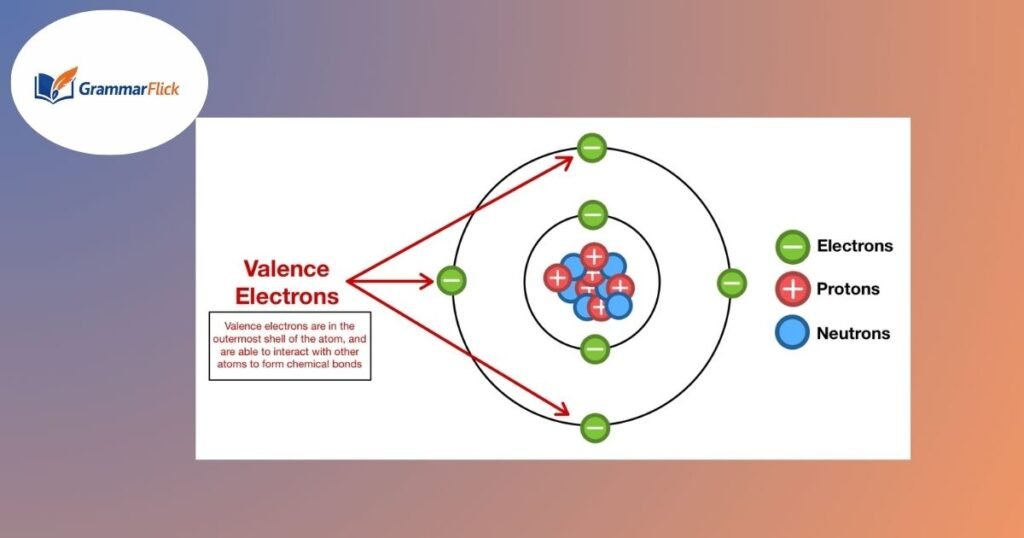
Understanding valence is essential in chemistry because it helps predict molecular structure and reactivity. Scientists use this concept to design new compounds, study chemical behavior, and understand the properties of different substances. Valence is a key building block in the study of chemical interactions.
Vector
A vector is a quantity that has both magnitude and direction. It is widely used in physics and mathematics to describe forces, velocity, and displacement. For example, wind moving at 20 km/h east is a vector because it includes both speed and direction. Vectors are often represented graphically with arrows.
They are essential in analyzing motion, engineering systems, and understanding physical forces. In biology, the term vector can also refer to organisms that transmit diseases, such as mosquitoes spreading malaria. This dual meaning makes the term important across multiple scientific disciplines.
Vertebrate
A vertebrate is an animal that has a backbone or spinal column. This group includes mammals, birds, reptiles, amphibians, and fish. Vertebrates are characterized by a well-developed skeletal system and complex organ structures. They are among the most studied organisms in biology due to their diversity and adaptability.
The backbone provides support and protection for the spinal cord, which is essential for movement and coordination. Scientists study vertebrates to understand anatomy, evolution, and ecosystems. Their presence in various habitats highlights the adaptability of life and the complexity of biological systems.
Final Words
Science words that start with “V” cover a wide range of disciplines, from physics and chemistry to biology and earth science. Each term offers insight into how the natural world functions and how scientific principles shape our understanding of reality. By learning these words, you build a stronger foundation in scientific literacy and critical thinking.
Whether it’s velocity in motion, viruses in biology, or volcanoes in geology, these concepts are essential in both academic and real-world contexts. Expanding your vocabulary in science opens the door to deeper knowledge, innovation, and curiosity about the universe.
FAQs
Why Is It Important to Learn Scientific Vocabulary, Like Words Starting with V?
Learning scientific vocabulary improves understanding of complex concepts, enhances communication in academic settings, and builds a strong foundation for further study in science-related fields.
Which “V” Science Word is Most Commonly Used?
Words like velocity, volume, and virus are among the most commonly used because they apply to everyday life, education, and widely studied scientific disciplines.