
Revealing The World of Science Words That Start With R: The Magical Terms
Science is filled with fascinating terms, and words that begin with the letter “R” are no exception. From fundamental concepts like radiation and reaction to advanced ideas such as relativity and RNA, these words help explain how the universe works at both microscopic and cosmic levels.
They are used across many scientific fields, including physics, chemistry, biology, and environmental science. Learning science words that start with R not only expands your vocabulary but also deepens your understanding of important processes and discoveries that shape modern science and everyday life.
List of Science Words That Start With R
- RADIATION
- REACTION
- REFRACTION
- REPLICATION
- RESPIRATION
- RESISTANCE
- RADIOCARBON DATING
- REPRODUCTION
- REGULATION
- RENEWABLE ENERGY
Radiation
Radiation is the process by which energy travels through space or a medium in the form of waves or particles. It plays a critical role in physics, chemistry, and biology, influencing everything from sunlight reaching Earth to medical imaging technologies. There are two main types: ionizing and non-ionizing radiation.
Ionizing radiation has enough energy to remove tightly bound electrons from atoms, while non-ionizing radiation does not. Scientists study radiation to understand atomic structures better, develop cancer treatments, and explore space. Its applications range from nuclear power generation to everyday tools like microwave ovens and wireless communication systems.
Reaction
In science, a reaction typically refers to a chemical process in which substances interact to form new products. These reactions involve breaking and forming chemical bonds, often accompanied by energy changes such as heat or light. Chemical reactions are fundamental to life, driving processes like digestion, respiration, and photosynthesis. Scientists classify reactions into types such as synthesis, decomposition, and combustion.
Understanding reactions helps researchers develop new materials, pharmaceuticals, and sustainable energy solutions. Reaction rates, influenced by factors like temperature and catalysts, are also crucial in industrial applications, making this concept essential across multiple scientific disciplines.
Read More: Noteworthy Science Words That Start With N: A Deep Dive into Nature, Numbers, and New Discoveries
Refraction
Refraction is the bending of light as it passes from one medium to another, such as air to water. This phenomenon occurs because light changes speed when it enters a medium with a different density. Refraction is responsible for everyday observations like a straw appearing bent in a glass of water or the formation of rainbows.
In science and engineering, refraction is essential for designing lenses used in glasses, microscopes, and telescopes. By studying refraction, scientists can better understand how light interacts with materials, enabling advancements in optics, imaging technologies, and even fiber-optic communication systems.
Replication
Replication is the process by which DNA makes an exact copy of itself, ensuring genetic information is passed from one cell to another. This process is vital for growth, repair, and reproduction in living organisms. DNA replication occurs in a highly regulated manner, involving enzymes like helicase and DNA polymerase.
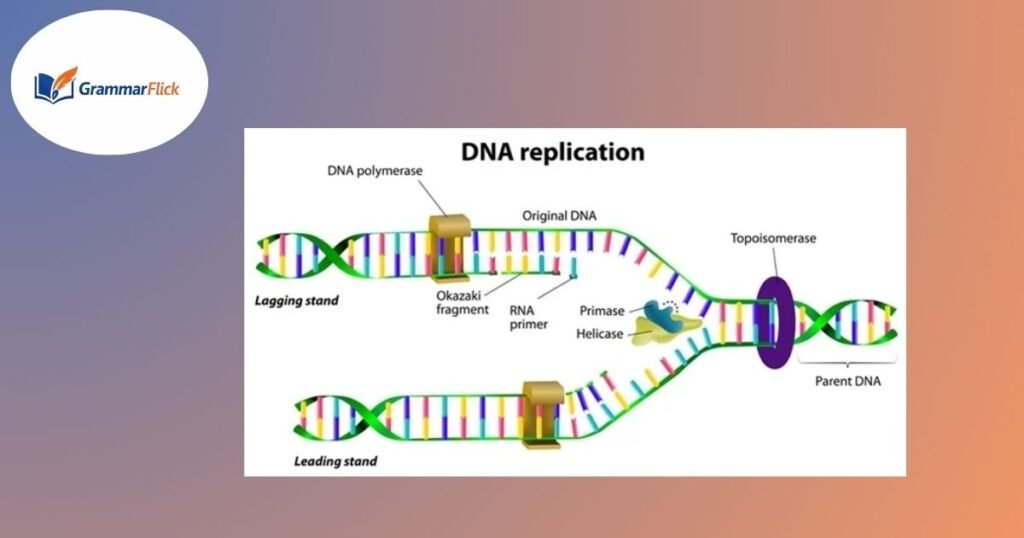
Errors in replication can lead to mutations, which may have beneficial, neutral, or harmful effects. Scientists study replication to understand genetic diseases, improve medical treatments, and advance biotechnology. Techniques like PCR (polymerase chain reaction) are based on replication principles and are widely used in research and diagnostics.
Respiration
Respiration is a biochemical process that cells use to convert nutrients into energy in the form of ATP. This process can be aerobic, requiring oxygen, or anaerobic, occurring without oxygen. Cellular respiration involves multiple stages, including glycolysis, the Krebs cycle, and the electron transport chain.
It is essential for maintaining life, as it powers cellular activities and supports organismal functions. In humans, respiration also refers to breathing, which facilitates gas exchange in the lungs. Scientists study respiration to understand metabolism, improve athletic performance, and develop treatments for respiratory diseases and metabolic disorders.
Resistance
Resistance refers to the opposition to the flow of electric current in physics, commonly measured in ohms. It plays a vital role in electrical circuits, influencing how devices function and how energy is distributed. In biology, resistance can refer to an organism’s ability to withstand harmful agents, such as antibiotic resistance in bacteria. This dual meaning highlights the concept’s importance across disciplines.
Engineers design resistors to control current, while biologists study resistance to combat diseases. Understanding resistance enables advancements in electronics, healthcare, and environmental science, making it a cornerstone concept in modern scientific research.
Radiocarbon Dating
Radiocarbon dating is a scientific method used to determine the age of organic materials by measuring the decay of carbon-14 isotopes. This technique is widely used in archaeology, geology, and environmental science to study ancient artifacts, fossils, and historical events. Living organisms continuously exchange carbon with the atmosphere, but once they die, carbon-14 begins to decay at a known rate.
By measuring the remaining carbon-14, scientists can estimate how long it has been since the organism’s death. Radiocarbon dating has revolutionized our understanding of history, providing accurate timelines for ancient civilizations and natural processes.
Reproduction
Reproduction is the biological process by which organisms produce new individuals, ensuring the survival of the species. It can occur sexually, involving two parents, or asexually, involving a single organism. Sexual reproduction increases genetic diversity, while asexual reproduction allows for rapid population growth. This process is fundamental to evolution, as genetic variations contribute to natural selection.
Scientists study reproduction to understand fertility, genetic inheritance, and developmental biology. Advances in reproductive technologies, such as in vitro fertilization, have transformed medicine and provided solutions for individuals facing infertility challenges, highlighting the importance of this essential concept.
Regulation
Regulation refers to the mechanisms that maintain stability and balance within biological systems, often described as homeostasis. Organisms rely on regulatory processes to control temperature, pH levels, and nutrient balance. Hormones and the nervous system play key roles in regulating bodily functions.
Disruptions in regulation can lead to diseases such as diabetes or hypertension. Scientists study regulatory systems to develop treatments that restore balance and improve health outcomes. Beyond biology, regulation also applies to ecosystems and environmental systems, ensuring stability and sustainability. Understanding regulation is essential for advancing medicine and preserving ecological health.
Renewable Energy
Renewable energy refers to energy derived from natural sources that are replenished over time, such as solar, wind, and hydroelectric power. Unlike fossil fuels, renewable energy sources produce little to no greenhouse gas emissions, making them essential in combating climate change.
Scientists and engineers are continuously developing more efficient technologies to harness these energy sources. Renewable energy systems are becoming increasingly important as global energy demand rises. By investing in sustainable energy solutions, societies can reduce environmental impact and promote long-term economic growth, ensuring a cleaner and more sustainable future for generations to come.
Final Words
Science words that start with R span a wide range of disciplines, from fundamental physics concepts like radiation and relativity, to biological processes such as respiration and reproduction, and even earth and space science terms like regolith and retrograde motion. This diversity highlights how interconnected scientific fields are, with many “R” terms describing processes, structures, and phenomena essential to understanding the natural world.
Science Words That Start With R FAQs
Which “R” Words Are Used in Physics?
Physics uses words such as Radiation, Resistance, Resonance, Refraction, Relativity, and rest mass. These relate to energy, forces, and motion.
Are There “R” Words Used in Earth and Space Science?
Yes, examples include Runoff, Ridge, Rift, Regolith, Red giant, and Retrograde motion, which describe Earth processes and space phenomena.