Top Science Words That Start With S: Definitions, Examples, and Their Importance in Modern Science
Science vocabulary is vast, and many of the most influential terms begin with the letter S. These words appear across physics, chemistry, biology, earth science, astronomy, and environmental studies. Understanding them helps students, educators, and researchers communicate ideas clearly and explore scientific concepts more deeply. This guide explores essential science words that start with S, each explained to support learning, SEO visibility, and academic clarity.
List of Science Words That Start With S
- Science
- Species
- Solar Energy
- Solution
- Symbiosis
- Sediment
- Synthesis
- Systum
- Stimulus
- Sustainability
- Spectrum
- Solubility
- Satellite
- Seismology
- Symmetry
Science
Science is the systematic study of the natural world through observation, experimentation, and evidence‑based reasoning. It helps humans understand how the universe works, from the smallest particles to the largest galaxies. Science is divided into major branches such as physical science, life science, and earth science, each containing specialized fields.
The scientific method asking questions, forming hypotheses, conducting experiments, and analyzing results, ensures accuracy and reliability. Science drives innovation, improves technology, and solves global challenges. Understanding science builds critical thinking skills and encourages curiosity about the world.
Species
A species is a group of organisms that can interbreed and produce fertile offspring. It is the most specific level of biological classification and a key concept in understanding biodiversity. Scientists identify species based on physical traits, genetic similarities, and evolutionary history.
Studying species helps researchers track population changes, protect endangered organisms, and understand ecological relationships. Species diversity supports healthy ecosystems by maintaining balance and resilience. The concept of species also plays a central role in evolution, natural selection, and conservation biology.
Read More: Revealing The World of Science Words That Start With R: The Magical Terms
Solar Energy
Solar energy is the radiant energy emitted by the Sun and captured by Earth. It is a renewable, clean, and abundant source of power used for heating, electricity generation, and photosynthesis. Solar panels convert sunlight into electricity through photovoltaic cells, reducing dependence on fossil fuels.
Solar energy drives weather patterns, ocean currents, and climate systems. Plants rely on solar energy to produce food, forming the base of nearly all food chains. Understanding solar energy helps scientists develop sustainable technologies and address global energy challenges.
Solution
A solution is a homogeneous mixture in which one substance (the solute) dissolves evenly into another (the solvent). Solutions are essential in chemistry, biology, medicine, and environmental science. Common examples include saltwater, sugar dissolved in tea, and air as a mixture of gases.
Solutions allow chemical reactions to occur more efficiently because particles are evenly distributed. Scientists study concentration, solubility, and saturation to understand how substances interact. Solutions also play a major role in biological processes such as nutrient transport, blood chemistry, and cellular function.
Symbiosis
Symbiosis describes a close and long‑term biological relationship between two different species. These relationships can be mutualistic (both benefit), commensal (one benefits, the other is unaffected), or parasitic (one benefits at the other’s expense). Symbiosis is essential for ecosystem stability and evolution.
Examples include bees pollinating flowers, bacteria living in the human gut, and clownfish sheltering in sea anemones. Studying symbiosis helps scientists understand interdependence, adaptation, and ecological balance. It also reveals how species evolve together and influence each other’s survival.
Sediment
Sediment consists of small particles of rock, minerals, or organic material that accumulate through erosion and deposition. Sediments are transported by wind, water, ice, and gravity, eventually forming layers that become sedimentary rock. Studying sediment helps geologists understand Earth’s history, climate changes, and past environments.
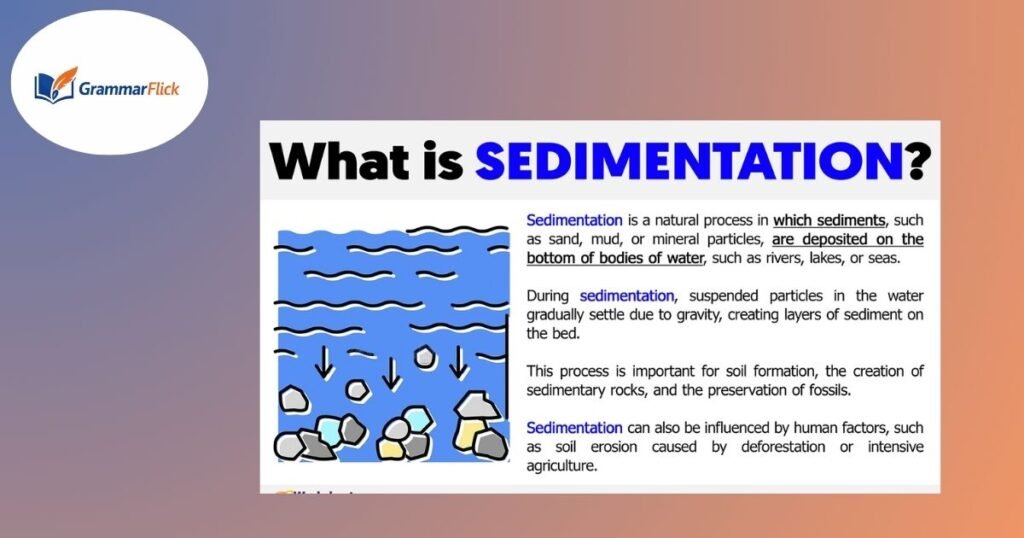
Sediment also plays a role in river systems, coastal processes, and soil formation. In environmental science, sediment analysis helps identify pollution sources and ecosystem health. Sediments preserve fossils, providing valuable clues about ancient life and geological events.
Synthesis
Synthesis refers to the process of combining smaller components to form a more complex substance or idea. In chemistry, synthesis involves creating new compounds through controlled reactions. In biology, protein synthesis builds essential molecules that support life. In science generally, synthesis means integrating information to form new conclusions or theories.
This process drives innovation, discovery, and problem‑solving. Scientists rely on synthesis to develop medicines, materials, and technologies. Understanding synthesis helps students connect concepts and see how different scientific ideas fit together.
System
A system is a group of interacting parts that work together to form a functioning whole. Systems appear in biology (digestive system), physics (solar system), ecology (ecosystems), and technology (computer systems). Studying systems helps scientists understand how components influence each other and maintain balance.
Systems thinking allows researchers to analyze complex problems such as climate change, population growth, and energy use. Systems can be open, closed, simple, or complex, depending on how they exchange matter and energy. Understanding systems improves scientific reasoning and problem‑solving.
Stimulus
A stimulus is any change in the environment that triggers a response in an organism. Stimuli can be internal or external, such as light, sound, temperature, hunger, or pain. In biology, stimuli activate sensory receptors that send signals to the brain or other control centers. Plants also respond to stimuli through tropisms, such as growing toward light.
Studying stimuli helps scientists understand behavior, adaptation, and survival. In psychology, stimuli are used to study learning and conditioning. Recognizing how organisms respond to stimuli reveals how they interact with their environment.
Sustainability
Sustainability refers to using resources in a way that meets present needs without compromising the ability of future generations to meet theirs. It involves balancing environmental protection, economic growth, and social well‑being. Sustainable practices include renewable energy, conservation, recycling, and responsible land use.
Scientists study sustainability to address climate change, pollution, and biodiversity loss. Sustainable development supports long‑term ecological health and human prosperity. Understanding sustainability encourages individuals and communities to make choices that protect the planet and ensure a stable future.
Spectrum
A spectrum is a range of wavelengths or frequencies of electromagnetic radiation. Visible light, for example, includes the colors red through violet. Spectra also include ultraviolet, infrared, radio waves, X‑rays, and gamma rays.
Scientists use spectroscopy to analyze the composition of stars, chemicals, and materials by studying how they absorb or emit light. Spectra reveal important information about energy, temperature, and atomic structure. Understanding the electromagnetic spectrum is essential in physics, astronomy, medicine, and communication technology.
Solubility
Solubility describes how well a substance dissolves in a solvent. It depends on temperature, pressure, and the chemical nature of the solute and solvent. Solubility is crucial in chemistry, biology, medicine, and environmental science.
For example, oxygen’s solubility in water affects aquatic life, while drug solubility determines how medicines are absorbed in the body. Scientists study solubility to design chemical reactions, create solutions, and understand natural processes. Solubility also influences weathering, nutrient cycles, and industrial manufacturing.
Satellite
A satellite is an object that orbits a planet, star, or other celestial body. Natural satellites include moons, while artificial satellites are human‑made devices used for communication, navigation, weather monitoring, and scientific research.
Satellites collect data about Earth’s climate, oceans, and atmosphere, helping scientists predict storms and track environmental changes. They also support GPS systems, television broadcasting, and space exploration. Understanding satellites helps students learn about orbital mechanics, gravity, and technological innovation.
Seismology
Seismology is the scientific study of earthquakes and seismic waves. Seismologists use instruments called seismographs to measure ground vibrations and analyze Earth’s internal structure. This field helps scientists understand tectonic plate movement, volcanic activity, and geological hazards.
Seismology plays a crucial role in earthquake prediction, building design, and disaster preparedness. By studying seismic waves, researchers gain insights into Earth’s layers, including the crust, mantle, and core. Seismology also contributes to resource exploration and environmental monitoring.
Symmetry
Symmetry refers to balanced proportions or patterns that repeat across an axis or plane. It appears in biology (butterfly wings), physics (crystal structures), chemistry (molecular shapes), and art. Symmetry helps scientists understand natural patterns, evolutionary advantages, and structural stability.
In physics, symmetry principles guide theories about particles and forces. In biology, symmetry influences movement, reproduction, and survival. Studying symmetry reveals how nature organizes itself and how humans design efficient structures and technologies.
Final Words
Science words that start with S highlight just how broad, interconnected, and essential scientific language truly is. Terms like species, system, spectrum, sustainability, and solar energy help explain everything from life on Earth to the forces shaping the universe. These S‑words appear across biology, chemistry, physics, earth science, and environmental studies, making them valuable for students, educators, and researchers.
Understanding them strengthens scientific literacy, supports academic success, and encourages curiosity about how the natural world works. Exploring science vocabulary, especially foundational words beginning with S, builds a stronger foundation for future learning and discovery.
FAQs
Why Are Science words That Start with S Important?
Many S‑words represent foundational scientific ideas. For example, species helps classify living organisms, system explains how parts work together, and solar energy describes a major renewable resource. These words help students understand key scientific concepts.
What is a Good S‑word for Earth Science?
Earth science uses words like sediment, seismology, soil, and satellite. These terms help explain geological processes, natural hazards, and Earth observation.